Skip to content

Actor ReelRoute

Kei Satō
Kei Satō
Actor
21 December 1928 – 02 May 2010 | Aizuwakamatsu, Fukushima, Japan
16 films in this ReelRoute

Kei Satō (佐藤 慶, Satō Kei; born December 21, 1928 in Aizuwakamatsu – May 2, 2010) was a Japanese character actor and narrator. He is known for his work with Japanese New Wave director Nagisa Oshima, and for several films with Kaneto Shindo, such as Onibaba and Kuroneko.

Explore films from Kei Satō's work as an actor.

This automatically generated ReelRoute is a starting point, not a complete filmography.

How this ReelRoute is generated

Generated from TMDB movie credits matching this role. Non-documentary films must have a TMDB rating of at least 6.5/10, at least 50 votes, and a poster. Documentaries are currently exempt from those requirements. Eligible films are ranked using a popularity-based score, with up to 24 included, then displayed chronologically. Films outside this ReelRoute may still be part of the person's credits.
Poster for The Human Condition II: Road to Eternity (1959) 1

The Human Condition II: Road to Eternity

1959
1

The Human Condition II: Road to Eternity

1959

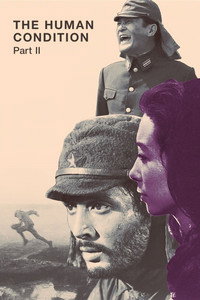
Kaji, sent to the Japanese army labeled Red, witnesses cruelties in the army and revolts against the abusive treatment against a fellow recruit. He also sees his friend Shinjô defecting to the Russian border, and he ends in the front to fight a lost battle against the Russian tanks division.

View details
Poster for Cruel Story of Youth (1960) 2

Cruel Story of Youth

1960

2

Cruel Story of Youth

1960

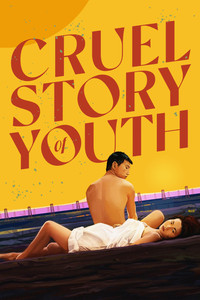
A harsh young man seduces a freeloading young woman and eventually takes advantage of her knack for hitchhiking to rob middle-class men.

View details
Poster for Harakiri (1962) 3

Harakiri

1962

3

Harakiri

1962

Down-on-his-luck veteran Tsugumo Hanshirō enters the courtyard of the prosperous House of Iyi. Unemployed, and with no family, he hopes to find a place to commit seppuku—and a worthy second to deliver the coup de grâce in his suicide ritual. The senior counselor for the Iyi clan questions the ronin’s resolve and integrity, suspecting Hanshirō of seeking charity rather than an honorable end. What follows is a pair of interlocking stories which lay bare the difference between honor and respect, and promises to examine the legendary foundations of the Samurai code.

View details
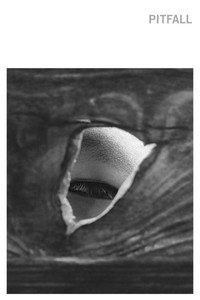
Poster for Pitfall (1962) 4

Pitfall

1962

4

Pitfall

1962

A man wanders into a seemingly deserted town with his young son in search of work. But after a bit of bad luck, he joins the town's population of lost souls.

View details
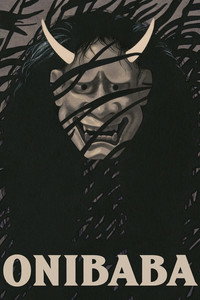
Poster for Onibaba (1964) 5

Onibaba

1964

5

Onibaba

1964

While her son, Kichi, is away at war, a woman and her daughter-in-law survive by killing samurai who stray into their swamp, then selling whatever valuables they find. Both are devastated when they learn that Kichi has died, but his wife soon begins an affair with a neighbor who survived the war, Hachi. The mother disapproves and, when she can't steal Hachi for herself, tries to scare her daughter-in-law with a mysterious mask from a dead samurai.

View details
Poster for Kwaidan (1965) 6

Kwaidan

1965

6

Kwaidan

1965

Taking its title from an archaic Japanese word meaning "ghost story," this anthology adapts four folk tales. A penniless samurai marries for money with tragic results. A man stranded in a blizzard is saved by Yuki the Snow Maiden, but his rescue comes at a cost. Blind musician Hoichi is forced to perform for an audience of ghosts. An author relates the story of a samurai who sees another warrior's reflection in his teacup.

View details
Poster for Irezumi (1966) 7

Irezumi

1966

7

Irezumi

1966

Otsuya, the daughter of a rich merchant, elopes with her lover Shinsuke, an employee of her father's. During their flight, Otsuya's beauty attracts the gaze of Seikichi, a mysterious master tattooist who sees her pristine white skin as the perfect canvas for his art. The image of the large demonic spider that he emblazons across Otsuya's back marks her as the property of another man, radically altering her relationships with all around her as her personality seems to transform under its influence.

View details
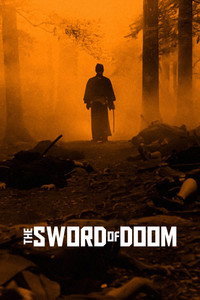
Poster for The Sword of Doom (1966) 8

The Sword of Doom

1966

8

The Sword of Doom

1966

Ryunosuke, a gifted swordsman plying his trade during the turbulent final days of Shogunate rule, has no moral code and kills without remorse. It’s a way of life that leads to madness.

View details
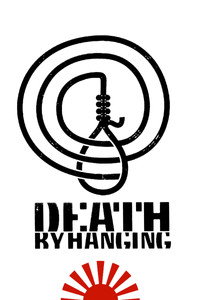
Poster for Death by Hanging (1968) 9

Death by Hanging

1968

9

Death by Hanging

1968

A Korean man is sentenced to death in Japan but somehow survives his execution, sending the authorities into a panic about what to do next.

View details
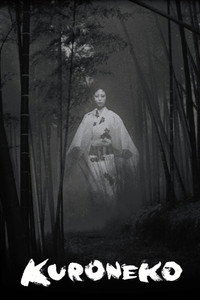
Poster for Kuroneko (1968) 10

Kuroneko

1968

10

Kuroneko

1968

In the Sengoku period, a woman and her daughter are raped and murdered by soldiers during a time of civil war. Afterwards, a series of samurai returning from the war through that area are found mysteriously dead with their throats torn out. The governor calls in a wild and fierce young hero to quell what is evidently an Onryō ghost.

View details
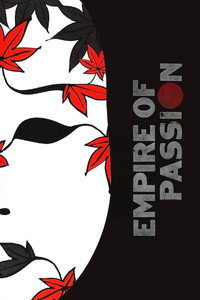
Poster for Empire of Passion (1978) 11

Empire of Passion

1978

11

Empire of Passion

1978

A married woman and her lover murder her husband and dump his body into a well, but his ghost returns to haunt them as the local gossip intensifies.

View details
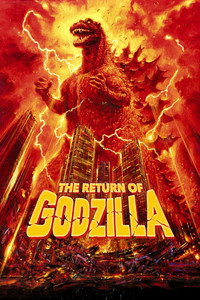
Poster for The Return of Godzilla (1984) 12

The Return of Godzilla

1984

12

The Return of Godzilla

1984

After a fishing boat is attacked, the sole surviving crew member realizes it is none other than a resurrected Godzilla. However, efforts to bring the story to light are suppressed by the Japanese government amid growing political tensions between the United States and the Soviet Union, who are both willing to bomb Japan to stop the monster.

View details
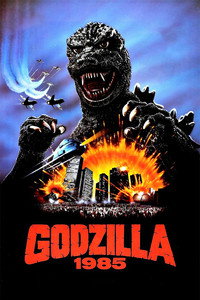
Poster for Godzilla 1985 (1985) 13

Godzilla 1985

1985

13

Godzilla 1985

1985

Originally released in Japan as "The Return of Godzilla" in 1984, this is the heavily re-edited, re-titled "Godzilla 1985". Adding in new footage of Raymond Burr, this 16th Godzilla film ignores all previous sequels and serves as a direct follow-up to the 1956 "Godzilla King of the Monsters", which also featured scenes with Burr edited into 1954's "Godzilla". This film restores the darker tone of the original, as we witness the nuclear destruction of giant lizard terrorizing Japan.

View details
Poster for Taboo (1999) 14

Taboo

1999

14

Taboo

1999

Set during Japan's Shogun era, this film looks at life in a samurai compound where young warriors are trained in swordfighting. A number of interpersonal conflicts are brewing in the training room, all centering on a handsome young samurai named Sozaburo Kano. The school's stern master can choose to intervene, or to let Kano decide his own path.

View details
Poster for Azumi (2003) 15

Azumi

2003

15

Azumi

2003

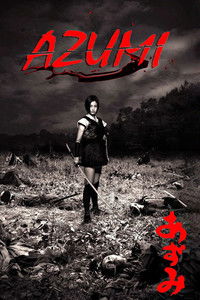
In war-torn Japan, the Tokugawa Shogun, desperate to restore peace to his people, orders the assassination of the hostile warlords. A beautiful young woman is raised from birth with nine other orphans, to become an assassin. Her name is Azumi, the ultimate assassin.

View details
Poster for Kaiji: The Ultimate Gambler (2009) 16

Kaiji: The Ultimate Gambler

2009

16

Kaiji: The Ultimate Gambler

2009

Kaiji Ito moves to Japan after graduating from high school. Unable to find a job and frustrated with society at large, Kaiji spends his days gambling, vandalizing cars, and drinking booze. Two years later and his life is no better. A debt collector named Endo arrives to collect money owed. The debt collector offers two choices to Kaiji: spend 10 years paying off his loan or board a gambling boat for one night to repay his debt & possibly make a boat load of money. Could the debt collector Endo actually be setting up Kaiji? One way or another, for Kaiji it's going to be the night of his life.

View details