Skip to content

ReelRoute Auto-generated
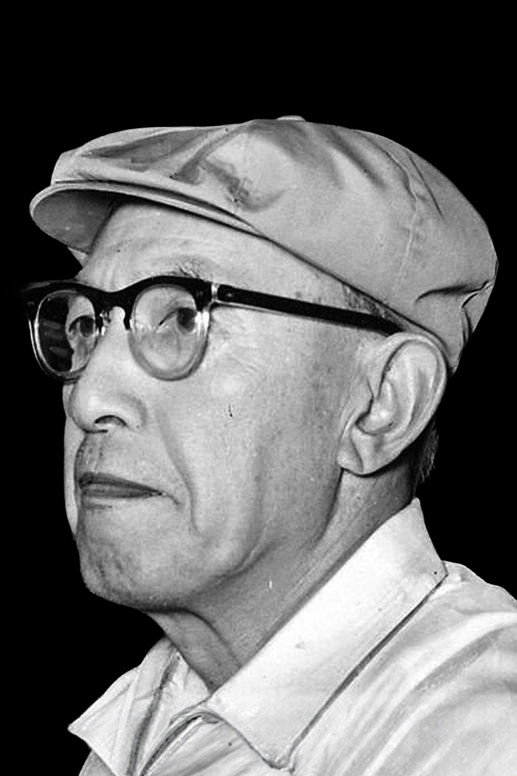
Tomu Uchida
Tomu Uchida
29 films in this ReelRoute

Filmography for Tomu Uchida, sourced from TMDB.

This automatically generated ReelRoute is a starting point, not a complete filmography.

Generated from TMDB director credits, not curated.
Poster for A Living Puppet (1929) 1

A Living Puppet

1929

1

A Living Puppet

1929

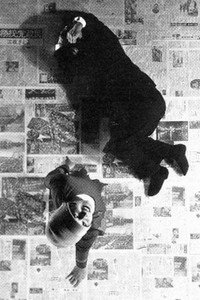
A man rises in society by cheating, but the institutions in turn take their revenge.

View details
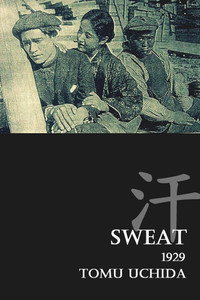
Poster for Sweat (1929) 2 50m

Sweat

1929

2

Sweat

1929 · 50m

Sweat (1929) is a slapstick riff on tendency-film themes, as a bored young millionaire has his clothes stolen by a tramp; dressed in the tramp’s clothes, he has to accept work as a labourer. As the hero ends up building the mausoleum he had himself commissioned.

View details
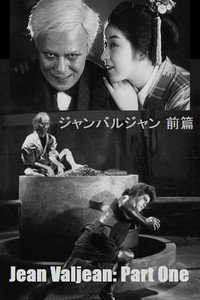
Poster for Jean Valjean: Part One (1931) 3

Jean Valjean: Part One

1931

3

Jean Valjean: Part One

1931

The first part of a fascinating melodrama based on Victor Hugo's Les Misérables, the action of which is transferred to the era of the Meiji Revolution. The film has not survived.

View details
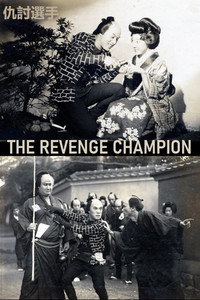
Poster for The Revenge Champion (1931) 4 2h 20m

The Revenge Champion

1931

4

The Revenge Champion

1931 · 2h 20m

Lost film, directed by Tomu Uchida. This film is a very funny comedy that makes fun of the moral code of the samurai Bushido, which has become obsolete and turned into an empty form during the period of feudalism.

View details
Poster for Police Officer (1933) 5 2h 1m

Police Officer

1933

5

Police Officer

1933 · 2h 1m

Itami, a young policeman, meets his high school friend, Tetsuo, a gangster, at a roadblock. As they rekindled their friendship, a complex relationship is established between them.

View details
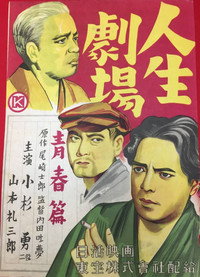
Poster for Theater of Life: Youth Version (1936) 6 1h 58m

Theater of Life: Youth Version

1936
6

Theater of Life: Youth Version

1936 · 1h 58m

During the 20s in Japan, a romantic student at Tokyo's Waseda University is filled with noble sentiments absorbed from literature but his naive illusions will be shattered by the ruthless realities of money and power.

View details
Poster for Unending Advance (1937) 7 1h 39m

Unending Advance

1937

7

Unending Advance

1937 · 1h 39m

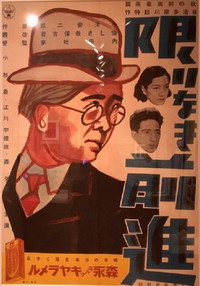
One of Uchida’s early sound films, Unending Advance is based on a curious story by Yasujiro Ozu, in which an examination of the quotidian problems of a middle-aged salaryman and his family segues into an idyllic dream of an implausible future. The surviving print, although incomplete, offers an essential glimpse into Uchida’s prewar period, when he was associated more with realist dramas than with the period films that dominated his work after the war.

View details
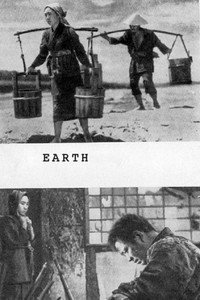
Poster for Earth (1939) 8 1h 55m

Earth

1939

8

Earth

1939 · 1h 55m

Kanji is a poor peasant widower who struggles to earn a living for his daughter and himself and to pay off his father-in-law's debts.

View details
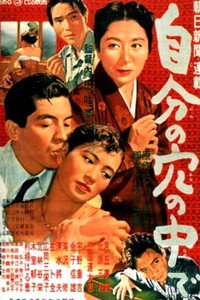
Poster for A Hole of My Own Making (1955) 9 2h 5m

A Hole of My Own Making

1955

9

A Hole of My Own Making

1955 · 2h 5m

Nobuko is a widow who lives with her stepchild Tamiko and her brother Junjiro. The family's gatekeeper, Komatsu, is attracted to Tamiko, but she is encouraged to marry a doctor and he is afraid to tell her his feelings.

View details
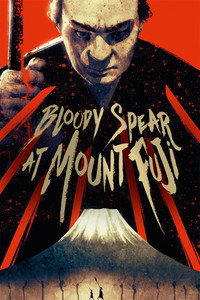
Poster for Bloody Spear at Mount Fuji (1955) 10 1h 34m

Bloody Spear at Mount Fuji

1955
10

Bloody Spear at Mount Fuji

1955 · 1h 34m

Tragicomic road movie set during the Edo period. It follows a samurai, his two servants – including spear-carrier Genpachi – and the various people they meet on their journey, including a policeman in pursuit of a thief, a young child and a woman who is to be sold into prostitution.

View details
Poster for Twilight Saloon (1955) 11 1h 34m

Twilight Saloon

1955

11

Twilight Saloon

1955 · 1h 34m

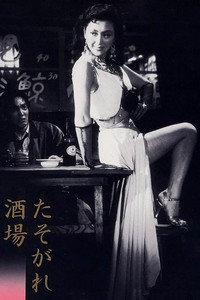
Inside a bustling postwar Tokyo beer hall, a diverse group of patrons, performers, and workers spend a single evening navigating their personal frustrations and social anxieties. A disillusioned professor, a struggling artist, and various laborers find their lives intersecting through chance encounters and heated arguments fueled by drink.

View details
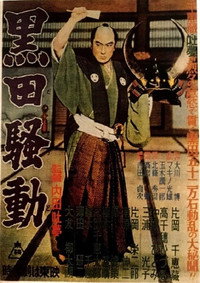
Poster for The Kuroda Affair (1956) 12 1h 48m

The Kuroda Affair

1956

12

The Kuroda Affair

1956 · 1h 48m

This adaptation of a Hideji Hojo novel, about the historical uprising of the Kuroda clan in 1633, is told through the eyes of retainer, Daizen. As his clan’s new leader, Tadayuki, becomes increasingly militant in his opposition to the Tokugawa shogunate, Daizen is forced to reconcile his loyalty to the clan with his loyalty to Tadayuki, who seems dead set on entangling the clan in destructive conflict. The Kuroda Affair’s mise-en-scène is said to have influenced future Toei director Eiichi Kudo. The film also features two of the greatest stars of Japanese period cinema, Chiezo Kataoka and Ryutaro Otomo.

View details
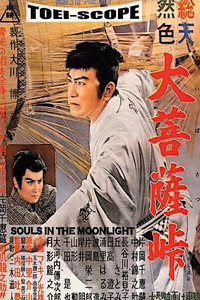
Poster for Souls in the Moonlight (1957) 13 1h 46m

Souls in the Moonlight

1957
13

Souls in the Moonlight

1957 · 1h 46m

First part of the famous Dai-bosatsu toge trilogy, based on Kaizan Nakazato’s unfinished long series of novels (41 books, written from 1913 to 1941). Set in the last period of the Tokugawa Shogunate, Daibosatsu Toge tells the story of Tsuke Ryunosuke, a nihilistic swordmaster who doesnt hesitate to kill anyone, bad or good. Despite the authors explicit refusal, the series were later made into plays and movies several times.

View details
Poster for The Eleventh Hour (1957) 14 1h 49m

The Eleventh Hour

1957

14

The Eleventh Hour

1957 · 1h 49m

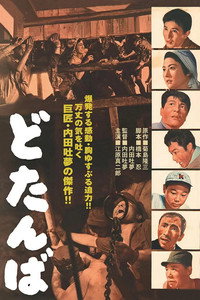
Based on a 1956 television feature on Japan’s national network, NHK, this is one of Uchida’s rarest films. A socially conscious drama with a contemporary backdrop, Dotanba focuses on the attempts to rescue a group of trapped miners. The title is a figure of speech — (essentially “last minute” or “eleventh hour”) — that refers to a situation of peril. The film boasts a script co-written by Uchida and Akira Kurosawa’s frequent screenwriter, Shinobu Hashimoto, and stars Kurosawa’s frequent star Takashi Shimura.

View details
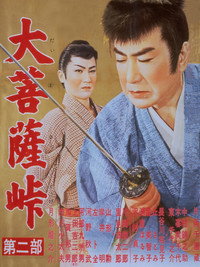
Poster for Souls in the Moonlight II (1958) 15 1h 45m

Souls in the Moonlight II

1958
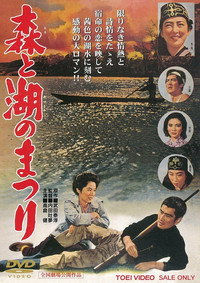
15

Souls in the Moonlight II

1958 · 1h 45m

This is the second installment of the trilogy based on Japan’s greatest novel “The Great Bodhisattva Pass”, following the life and times of bloodthirsty samurai, Tsukue Ryunosuke. Blinded in an explosion and further injured from a fall, the master swordsman is taken in by Otoyo, a woman who falls in love with him. Under Otoyo’s dedicated care, Ryunosuke’s physical and emotional wounds seem to heal. However, deep inside, the demons that drive him to kill yearn to resurface. Meanwhile he is being pursued by Utsugi Hyoma, a young samurai seeking to avenge his brother’s death at Tsukue’s hands. Hyoma is being aided along the way by the clever thief Shichibei.

View details
Poster for The Outsiders (1958) 16 1h 53m

The Outsiders

1958

16

The Outsiders

1958 · 1h 53m

A drama about relations between Japanese immigrants and the indigenous Ainu on Hokkaido, the most northerly island of Japan. From a novel by Taijun Takeda.

View details
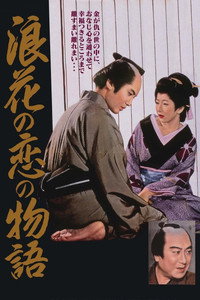
Poster for Chikamatsu's Love in Osaka (1959) 17 1h 45m

Chikamatsu's Love in Osaka

1959
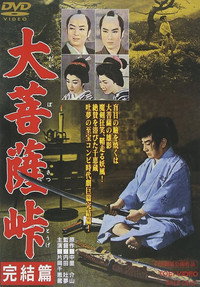
17

Chikamatsu's Love in Osaka

1959 · 1h 45m

Chubei, the adopted son of an Osaka courier, falls desperately in love with the courtesan Umegawa. To prevent a wealthy client from purchasing her, he steals money from his employer to buy her freedom himself. Now hunted criminals, the lovers flee toward Yamato, pursued by the law.

View details
Poster for Souls in the Moonlight III (1959) 18 1h 46m

Souls in the Moonlight III

1959
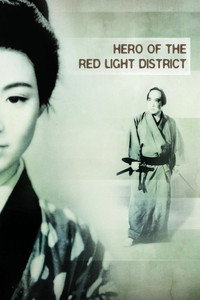
18

Souls in the Moonlight III

1959 · 1h 46m

Master swordsman, Tsukue Ryunosuke is confronted by the families of his victims. Will justice be served for the lost innocent lives? The conclusion of the famed Jidaigeki series is an amazing film, with a completely different perspective on the story from the later versions. While the international audience is more familiar with the “Sword of Doom” and “Satan’s Sword” versions of Daibosatsu Toge (The Great Bodhisattva Pass), the “Souls in the Moonlight” trilogy casts an entirely different light on Ryunosuke and his motives. Can this brutal killer be brought to justice, or is living his life as a blind wanderer a more terrible fate? His sword skills have not diminished, nor has his desire to kill!

View details
Poster for Hero of the Red Light District (1960) 19 1h 49m

Hero of the Red Light District

1960
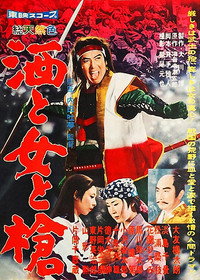
19

Hero of the Red Light District

1960 · 1h 49m

A successful textile industrialist from the provinces, who is beloved by his employees for his kindness, cannot find a wife because of a disfiguring birthmark on his face. Even the courtesans in Yoshiwara refuse to entertain him, until an indentured peasant prostitute, Tamarazu, takes the unsavoury assignment and treats him with brash tenderness.

View details
Poster for The Master Spearman (1960) 20 1h 39m

The Master Spearman

1960

20

The Master Spearman

1960 · 1h 39m

Kurando is a retired samurai. Granted a last-second reprieve from the obligation to commit harakiri, he decides to settle down and marry one of the two kabuki actresses who helped him enjoy what he thought would be his final days.

View details
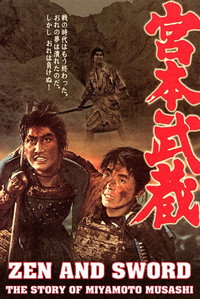
Poster for Miyamoto Musashi (1961) 21 1h 50m

Miyamoto Musashi

1961

21

Miyamoto Musashi

1961 · 1h 50m

In this first episode, we are introduced to Takezo, what Musashi used to be before he became the man of legend. His beginning are not exactly auspicious. He sides with the Toyotomi at Sekigahara, and as a result finds himself on the losing side of the historic battle. He and his friend Matahachi manage to escape the slaughter although the latter is wounded in his leg. They stumble across the young Akemi who makes her living with her mother Oko by robbing corpses of their armor and anything else they can sell. Oko takes it into her head to seduce Matahachi, which she does first by skillfully sucking the gangrene from his blood, and then just by sucking.

View details
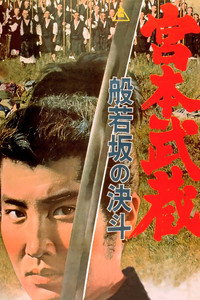
Poster for Miyamoto Musashi: Showdown at Hannyazaka Heights (1962) 22 1h 46m

Miyamoto Musashi: Showdown at Hannyazaka Heights

1962
22

Miyamoto Musashi: Showdown at Hannyazaka Heights

1962 · 1h 46m

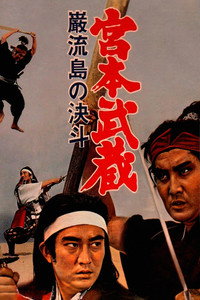
The remake of Yoshikawa's novel continues with the second installment in which Takezo, soon to be Miyamoto Musashi, emerges from the Himeji Castle after three years of intense contemplation and philosophical study and starting on his epic quest to complete his skill in the Way.

View details
Poster for The Mad Fox (1962) 23 1h 49m

The Mad Fox

1962

23

The Mad Fox

1962 · 1h 49m

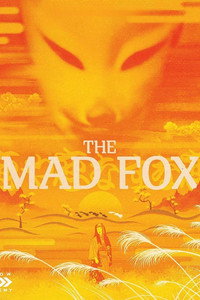
A court fortune-teller loses his mind after a conspiracy leads to the death of his lover. Hope appears to be on the horizon after he becomes romantically involved with his dead lover's twin sister, but more complications arise thanks to a chance encounter with a clan of shape-shifters.

View details
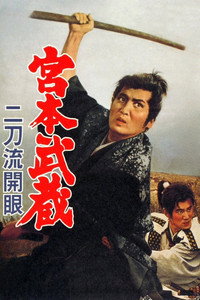
Poster for Miyamoto Musashi III: Birth of Two Sword Style (1963) 24 1h 43m

Miyamoto Musashi III: Birth of Two Sword Style

1963
24

Miyamoto Musashi III: Birth of Two Sword Style

1963 · 1h 43m

In the third installment of Yoshikawa's novel Musashi, things continue from the 2nd film at the end of battle, where Miyamoto continues on a mission of learning; with the introduction of his arch-rival Sasaki Kojiro; and lastly the large cast of characters rendezvouses for a fateful finale.

View details
Poster for Miyamoto Musashi IV: The Duel at Ichijo-ji Temple (1964) 25 2h 7m

Miyamoto Musashi IV: The Duel at Ichijo-ji Temple

1964
25

Miyamoto Musashi IV: The Duel at Ichijo-ji Temple

1964 · 2h 7m

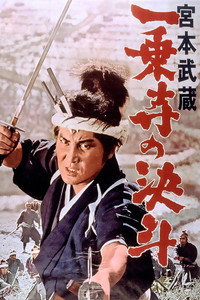
In the fourth installment, Musashi's potentially greatest opponent Kojiro jumps in and out of the story at the oddest and most coincidental moments. As his great love Otsu has succumbed to madness. Musashi then sets off to beat the functionaries of a treacherous clan in an arranged duel. 73 against one. Boastful Kojiro watches, secure in the knowledge that only he is a worthy opponent.

View details
Poster for A Fugitive from the Past (1965) 26 3h 3m

A Fugitive from the Past

1965
26

A Fugitive from the Past

1965 · 3h 3m

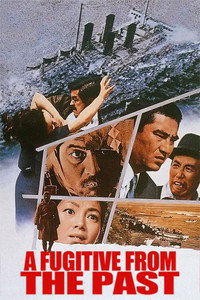
Three robbers escape with loot from a heist before one of them kills the others. Their corpses wash up near the aftermath of a maritime calamity, provoking a policeman's interest.

View details
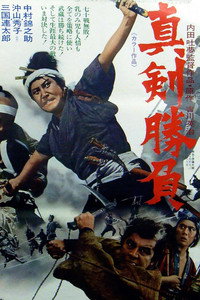
Poster for Miyamoto Musashi V: Musashi vs Kojiro (1965) 27 2h

Miyamoto Musashi V: Musashi vs Kojiro

1965
27

Miyamoto Musashi V: Musashi vs Kojiro

1965 · 2h

The fifth and final installment with the build up of the epic battle between Sasaki Kojiro and Miyamoto Musashi. With all the familiar characters making appearances: Otsu (Musashi's great love), Akemi, Matahachi (his former fellow soldier), old lady Osugi (still doggedly trying to defeat Musashi), and even the return of Priest Takuan (the man responsible for his journey towards enlightenment). But most of all, the boastful, long-haired and long-sworded Sasaki Kojiro.

View details
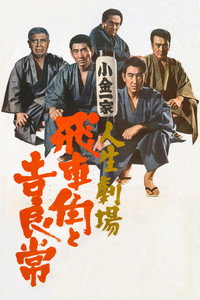
Poster for Hishakaku and Kiratsune: A Tale of Two Yakuza (1968) 28 1h 49m

Hishakaku and Kiratsune: A Tale of Two Yakuza

1968
28

Hishakaku and Kiratsune: A Tale of Two Yakuza

1968 · 1h 49m

With his penultimate film, Uchida revisited one of his popular prewar titles, 1936’s Theatre of Life, an adaptation of Shiro Ozaki’s eponymous novel. Three-time Seijun Suzuki collaborator Goro Tanada wrote a gangsterized adaptation of Ozaki’s story for Uchida at a time when the yakuza had eclipsed the samurai genre as Toei's main cash crop. Protagonist Hishakaku murders a man in a quarrel over a barmaid and goes to jail. In his temporary absence, his girlfriend Otoyo, a former geisha, falls for Hishakaku’s brother, inciting a dangerous love triangle that, in typical yakuza fashion, ends tragically.

View details
Poster for Miyamoto Musashi VI: Swords of Death (1971) 29 1h 15m

Miyamoto Musashi VI: Swords of Death

1971

29

Miyamoto Musashi VI: Swords of Death

1971 · 1h 15m

In the sixth and final episode Rentaro Mikuni steals the show as Baiken Shishido, Musashi's nemesis. Mikuni is the nominal villain of the film, but he is a devoted husband and father as well. He tries to kill Musashi only to avenge the death of his brother-in-law. While Baiken (who wields a chain and sickle against Musashi's sword) is a very human character and the emotions that Mikuni displays in his performance are quite believable and engaging

View details