Skip to content

ReelRoute Auto-generated
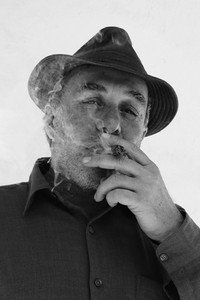
Júlio Bressane
Júlio Bressane
13 February 1946 | Rio de Janeiro, Rio de Janeiro, Brazil
37 films in this ReelRoute

Júlio Eduardo Bressane de Azevedo (Rio de Janeiro, February 13, 1946 ) is a Brazilian filmmaker and writer. A representative of the Brazilian Cinema Marginal, he began making films as an assistant director of Walter Lima Jr., in 1965.

Filmography for Júlio Bressane, sourced from TMDB.

This automatically generated ReelRoute is a starting point, not a complete filmography.

Generated from TMDB director credits, not curated.
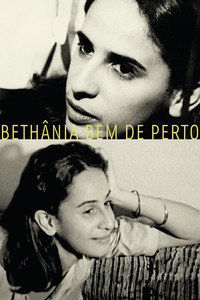
Poster for Bethânia Bem de Perto: A Propósito de um Show (1966) 1 33m

Bethânia Bem de Perto: A Propósito de um Show

1966
1

Bethânia Bem de Perto: A Propósito de um Show

1966 · 33m

Documentary about Maria Bethânia, at the very beginning of her career as a singer, when she arrived in Rio da Bahia to replace Nara Leão in the show Opinião. Bethânia's appearance, at that time in southern Rio, was a cultural shock that shook the city. The film also contains scenes of her daily life and meetings with other musicians.

View details
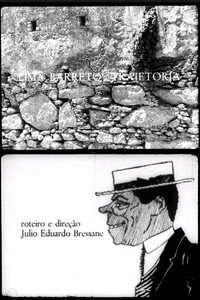
Poster for Lima Barreto: Trajetória (1966) 2

Lima Barreto: Trajetória

1966

2

Lima Barreto: Trajetória

1966

Short film about the life and career of the notorious Brazilian writer Lima Barreto.

View details
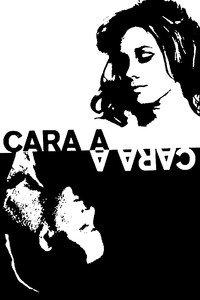
Poster for Face to Face (1967) 3 1h 12m

Face to Face

1967

3

Face to Face

1967 · 1h 12m

The story of a civil servant who lives with his elderly mother. Falling in love with a corrupt politician's young and rich daughter, he abandons himself to crazy and violent situations.

View details
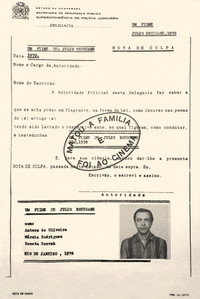
Poster for Killed the Family and Went to the Movies (1969) 4 1h 4m

Killed the Family and Went to the Movies

1969
4

Killed the Family and Went to the Movies

1969 · 1h 4m

A man living with his parents in a low middle-class apartment in Rio de Janeiro coldly stabs them with a razor and then goes to the movies. Marcia, a rich and dissatisfied young woman, takes advantage of a trip from her husband to go to her home in Petrópolis, where she receives a visit from an old friend, Regina.

View details
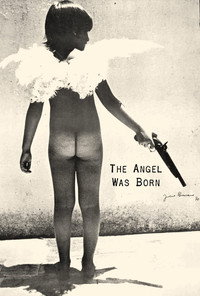
Poster for The Angel Was Born (1969) 5 1h 4m

The Angel Was Born

1969

5

The Angel Was Born

1969 · 1h 4m

Santamaria and Urtigo are two bandits on the run, one is white, the other black. Santamaria is a mystical visionary and believes in the imminent coming of a purifying angel. Urtiga, his inseparable companion, is a simple-minded and ingenious man who follows Santamaria around and participates in the crimes he commits. The two bandits take over a house after kidnapping its owner and his girlfriend.

View details
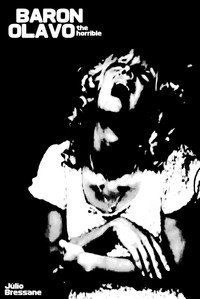
Poster for Baron Olavo, The Horrible (1970) 6 1h 2m

Baron Olavo, The Horrible

1970
6

Baron Olavo, The Horrible

1970 · 1h 2m

Bressane’s first color film, shot in the home of the artist Elyseu Visconti. Part of it is missing sound and final editing because the director was forced to leave Brazil. Horror and humor to deal with the subject of insanity: “In the end everyone leaves the house as though they were laboratory mice escaping, they invade the city and contaminate the world”. “If we talk about horror, this film deals with national horror, with Mojica Marins as an emblem. There might be a few touches of Corman and English horror, but it is another level of horror. What transformed the film was the location where we were shooting, the house of a 19th century painter, a receptacle of light. When I arrived and saw that house, that light, I said: ‘This is the film. This is the horror’. The meaning of the film, its appeal, derives from this laboratory of light” (J. Bressane). — Torino Film Festival

View details
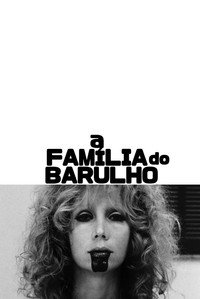
Poster for The Rowdy Family (1970) 7 1h 2m

The Rowdy Family

1970

7

The Rowdy Family

1970 · 1h 2m

A dysfunctional family, composed of a prostitute and two gay men, one strong and the other fragile and stupid, lives a routine life in Rio de Janeiro. When the slut threatens the other two to stop supporting them, they decide to find an odalisque as an alternative to keep their easy life.

View details
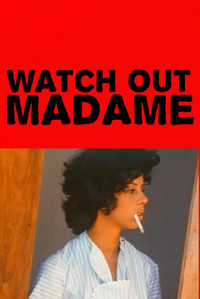
Poster for Watch Out, Madame (1970) 8 1h 8m

Watch Out, Madame

1970

8

Watch Out, Madame

1970 · 1h 8m

Two maids decide to rebel against the society that oppresses them and start murdering their own mistresses.

View details
Poster for Crazy Love (1971) 9 1h 25m

Crazy Love

1971

9

Crazy Love

1971 · 1h 25m

Bressane's second London film, shot in six days in his apartment. "I had seen the French avant-garde films of the 1920's and naturally the title cites Breton. But underneath it can also be read in many ways. It is a cinema that is invented on the spur of the moment, like you invent an instrument to play music and then abandon it. This film came out like an improvisation, a total risk. It is a deconstruction of meaning but not in the analytical, intellectual sense. I have always tried to lose myself with my films. There is no trace of American or French underground cinema. If anything, it is the idea of home movies, there were many ideas for digital films long before digital film existed. This film made itself, it was like a jazz improvisation. Amor Louco is a lost object, it doesn't speak any language, it has no signs, no letters, no captions. And in the scene where the cataract is cut with the razor blade, it was the adventure of the film itself that was put to the test".

View details
Poster for Memoirs of a Strangler of Blondes (1971) 10 1h 11m

Memoirs of a Strangler of Blondes

1971
10

Memoirs of a Strangler of Blondes

1971 · 1h 11m

First film by Julio Bressane shot in exile, "Memoirs" is a film about a man who repeatedly kills the same type of woman in same places, the same way. Filmed on the streets of London.

View details
Poster for A Fada do Oriente (1972) 11 53m

A Fada do Oriente

1972

11

A Fada do Oriente

1972 · 53m

A 1972 Portuguese language drama/adventure film written and directed by Júlio Bressane, starring Rosa Dias and Elyseu Visconti.

View details
Poster for Lágrima Pantera: A Míssil (1972) 12 1h 11m

Lágrima Pantera: A Míssil

1972
12

Lágrima Pantera: A Míssil

1972 · 1h 11m

A silent film shot in New York in 1972, including scenes in Hélio Oiticica’s apartment. Last film made in exile by Bressane, it mimics the experimental concept of "quasi-cinema" by Hélio Oiticica. It consists of a fragmentary experience of freedom, in super-8 and 16mm, in a code out of time, out of the square, while recreating (with different cameras) the wild and sensitive look that Oiticica dedicated to cinema. Its definitive 71-minute restored version was completed in the early 2000s.

View details
Poster for Chinese Viola (1975) 13 8m

Chinese Viola

1975

13

Chinese Viola

1975 · 8m

The rare short film presents a curious dialogue between filmmaker Julio Bressane and actor Grande Otelo, where, in a mixture of decorated and improvised text, we discover a little manifesto to the Brazilian experimental cinema. Also called "Belair's last film," Chinese Viola reveals the first partnership between photographer Walter Carvalho and Bressane.

View details
Poster for King of the Cards (1975) 14 1h 21m

King of the Cards

1975

14

King of the Cards

1975 · 1h 21m

In a movie studio, the actors are getting made up and the crew is waiting to begin shooting the film. Grande Otelo, the bungling "king of the deck", and Marta Anderson, the blond and provocative star of the show, recite in the historical scenario of the chanchadas, the abandoned studios of Cinédia. "The photography is splendid, it is a sort of parallel song, of critique, of parody, of understanding of a certain light typical of Brazilian cinema of the times, already re-created, already stylized. And with the older actors, Otelo, Lewgoy and the others, something very important happened in the artistic perception, seeing again, doing again, it was already a concrete metalanguage" (J. Bressane).

View details
Poster for O Monstro Caraíba (1975) 15

O Monstro Caraíba

1975

15

O Monstro Caraíba

1975

It is a film about the deep Brazil, not Brazil as a society, state or experience; it is a film about a geological, prehistoric and pre-logical Brazil. The adventures of the Caribbean monster, its wanderings along a virgin beach evoke, before Brazil, the artistic wanderings of a filmmaker in constant friction and, why not say, struggle against the mommy-daddy cinema, produced without taste, without joy and without adventure.

View details
Poster for The Agony (1976) 16 1h 30m

The Agony

1976

16

The Agony

1976 · 1h 30m

Cropped hair, a rosemary branch behind the ear, yellow shirt of shiny satin, he's behind the wheel of his car when passing by a woman who walks by the roadside. Strongly painted lips, printed dress with round skirt and red shoes matching the color of the lipstick, she catches his attention. He gives her a ride, the two of them stare in silence for a few moments. They introduce themselves to one another and between the two establishes an absurd dialogue and full of metaphors. And they are driving around in corners of Rio de Janeiro, to the sound of Noel Rosa and Lamartine Babo. Eva and Antena, she a seer, he, an assassin on the run, initiate an unusual case of love, a marginal love, where boredom often gives way to tragedy, creating the agony of a holiday spent in an abyss.

View details
Poster for Naive Cinema (1979) 17 39m

Naive Cinema

1979

17

Naive Cinema

1979 · 39m

An essay film on the editing of erotic movies.

View details
Poster for The Giant of America (1980) 18 1h 28m

The Giant of America

1980

18

The Giant of America

1980 · 1h 28m

A caboclo's soul wanders through purgatory (or hell), visiting many places until he boards a ship whose destination is unknown.

View details
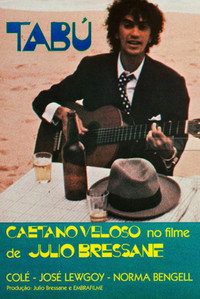
Poster for Tabu (1983) 19 1h 18m

Tabu

1983

19

Tabu

1983 · 1h 18m

The fictional encounter in Rio de Janeiro, Brazil (in the 30s) between popular songwriter Lamartine Babo and inconoclast poet and playwright Oswald de Andrade.

View details
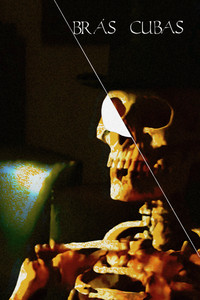
Poster for Brás Cubas (1985) 20 1h 32m

Brás Cubas

1985

20

Brás Cubas

1985 · 1h 32m

Irreverent adaptation of great writer Machado de Assis's masterpiece "Memórias Póstumas de Brás Cubas" ("Brás Cubas's Posthumous Memories"). A dead man tells about his love life and adventures, specially his affair with Virgília, a dubious married woman.

View details
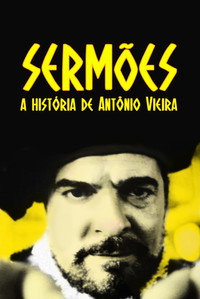
Poster for Sermões (1989) 21 1h 18m

Sermões

1989

21

Sermões

1989 · 1h 18m

Based upon the life story of Father Antonio Vieira, born in Lisbon in 1608 and deceased in Salvador, Bahia, in 1697. He's considered the first Brazilian writer and one of the most important aesthete of linguistic and of the Portuguese language of all times, a master in the art of metaphor, of verbal relations and analogy. He was persecuted and condemned by the Portuguese Court of Inquisition due to his position against native slavery, against the intolerance to the Jewish people and to the colonial politics of exploration.

View details
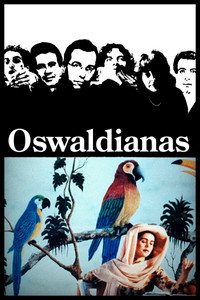
Poster for Oswaldianas (1992) 22 2h 23m

Oswaldianas

1992

22

Oswaldianas

1992 · 2h 23m

Collective film with five segments around the works and life of brazilian writer Oswald de Andrade.

View details
Poster for Dark Galaxy (1993) 23 40m

Dark Galaxy

1993

23

Dark Galaxy

1993 · 40m

"They are combinations of fragments. There are no stories, it is possible to mount these fragments in many ways. »Cine-eye or cine-voice-eye. The text of the Galaxies goes straight to the image. »A text rewritten for the eye» (H. de Campos). A short film that is more than experimental and that is based on a dark aesthetic that takes from the work of poet Haroldo de Campos its "dark matter" to combine it with the filmmaker's rarefied images and the puppet-like markings of actresses Bete Coelho and Mariana de Moraes.

View details
Poster for Miramar (1997) 24 1h 22m

Miramar

1997

24

Miramar

1997 · 1h 22m

Story with some autobiographical touches taken from director's life.

View details
Poster for São Jerônimo (1999) 25 1h 15m

São Jerônimo

1999

25

São Jerônimo

1999 · 1h 15m

Brazilian director Julio Bressane directs this religious biography on the life and work of Saint Jerome, the monk who first translated the Bible into Latin. Set both in the desert and in the posh confines of the Vatican, Jerome (Everaldo Pontes) agonizes over which Latin word would best fit its Hebrew counterpart. ~ Jonathan Crow, Rovi

View details
Poster for Days of Nietzsche in Turin (2002) 26 1h 25m

Days of Nietzsche in Turin

2002
26

Days of Nietzsche in Turin

2002 · 1h 25m

A cinematographic essay, without dialogues, about the months Nietszche spent in Turin, Italy, with narration quoted by his original writings.

View details
Poster for Cleopatra (2007) 27 1h 56m

Cleopatra

2007

27

Cleopatra

2007 · 1h 56m

The great battles are the backdrop for the unfolding of the Egyptian Queen's personal life. The strategy of Cleopatra is to seduce the Roman General Julius Caesar and Mark Antony to protect their civilization.

View details
Poster for Ver Viver Reviver (2007) 28 28m

Ver Viver Reviver

2007

28

Ver Viver Reviver

2007 · 28m

In September 2007 Júlio Bressane goes to Ferrara. In the cemetery of the Italian city he ends up making two movies.

View details
Poster for The Herb of the Rat (2009) 29 1h 20m

The Herb of the Rat

2009

29

The Herb of the Rat

2009 · 1h 20m

The names of the characters are pronouns. She is a teacher, with his father dead just three days ago. Faced with this situation, He intends to take care of her while He is alive. This is the beginning of an odd relationship.

View details
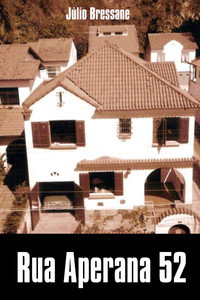
Poster for Aperana Street 52 (2012) 30 1h 20m

Aperana Street 52

2012

30

Aperana Street 52

2012 · 1h 20m

In his film Rua Aperana 52 Júlio Bressane describes the invention of a landscape, the topology of a corner of Rio de Janeiro. The film consists of a series of photographs taken between 1909 and 1955 by, among others, Bressane's parents at and around the address used as a title. These are interlarded with scenes from films made between 1957 and 2005, bringing the total fictional time the film covers to almost a century; one hundred years in which the winding road featured in almost every shot structures the new landscape behind the Aperana, which means 'wrong road'. Rua Aperana 52 is autobiographical, as it is a landscape from Bressane's youth, but it is also not so; it is more a multi-subjective mythology of a place seen through all those films and photographs. Bressane refers to his editing as an intuitive form of thinking aimed at evoking moods which make the viewer the new witness of the fictional landscape. A fiction about a fiction,

View details
Poster for Drumming Beat of the Stars (2012) 31 1h 14m

Drumming Beat of the Stars

2012
31

Drumming Beat of the Stars

2012 · 1h 14m

An essay around the streets, as an homage to Fernando Pessoa

View details
Poster for Sentimental Education (2013) 32 1h 24m

Sentimental Education

2013

32

Sentimental Education

2013 · 1h 24m

Sentimental Education centers on the unique relationship between Áurea, a lonely 40 year old teacher, and a young man she has just met by chance – one of these encounters which mythology and literature are full of. A delicate soul who finds itself attracted to a beauty that seems to demand, disturb and move her. That shakes her up entirely. During the days following their first conversation, she will expose all her feelings through classes in which he will let himself be carried away. Until an unusual episode from the past is revealed and changes everything.

View details
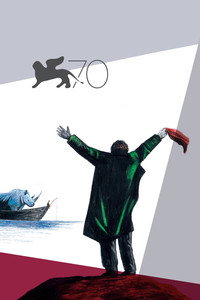
Poster for Venice 70: Future Reloaded (2013) 33 2h

Venice 70: Future Reloaded

2013
33

Venice 70: Future Reloaded

2013 · 2h

Made for the Venice Film Festival's 70th anniversary, seventy filmmakers made a short film between 60 and 90 seconds long on their interpretation of the future of cinema.

View details
Poster for Kid (2015) 34 1h 17m

Kid

2015

34

Kid

2015 · 1h 17m

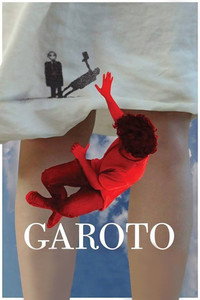
Inspired by Jorge Luis Borges’ The Disinterested Killer Bill Harrigan, Garoto follows a young couple who find themselves in an enchanted place where they experience an amorous and spiritual adventure.

View details
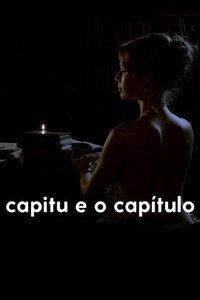
Poster for Capitu and the Chapter (2023) 35 1h 15m

Capitu and the Chapter

2023
35

Capitu and the Chapter

2023 · 1h 15m

“If you had to choose between me and your mother, who would it be?” Capitu asks provocatively of her problematic lover. Elsewhere, they dance to inaudible music with their friends, each couple keeping to a rhythm of their own. At times, this depiction of the memories we see one Dom Casmurro commit to paper with a flamboyant pen seems to be an interplay of conflicting emotions – particularly when jealousy raises its head. Adapted from the Brazilian classic novel 'Dom Casmurro' (1899) by Machado de Assis as an ironic/philosophical essay on poetry and jealousy, and featuring fragments of Bressane’s previous works.

View details
Poster for Rudder of Destiny (2023) 36 1h 13m

Rudder of Destiny

2023

36

Rudder of Destiny

2023 · 1h 13m

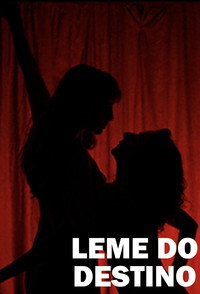
Two women, long-time friends, embark on a love story. They are writers who do not write to publish but for themselves. Their mutual conversation, their desires, the risks and phantoms of existence, the privilege of the wounded and of condemnation, traverse their speech, are a confession.

View details
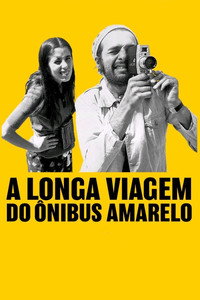
Poster for The Long Voyage of the Yellow Bus (2023) 37 7h 12m

The Long Voyage of the Yellow Bus

2023

37

The Long Voyage of the Yellow Bus

2023 · 7h 12m

For this behemoth, Bressane took his opera omnia and edited it in an order that first adheres to historical chronology but soon starts to move backwards and forward. The various pasts – the 60s, the 80s, the 2000s – comment on each other in a way that sheds light on Bressane’s themes and obsessions, which become increasingly apparent and finally, a whole idea of cinema reveals itself to the curious and patient viewer. Will Bressane, from now on, rework The Long Voyage of the Yellow Bus when he makes another film? Is this his latest beginning? Why not, for the eternally young master maverick seems to embark on a maiden voyage with each and every new film!

View details