Skip to content

ReelRoute Auto-generated
Harun Farocki
Harun Farocki
58 films in this ReelRoute

Filmography for Harun Farocki, sourced from TMDB.

This automatically generated ReelRoute is a starting point, not a complete filmography.

Generated from TMDB director credits, not curated.
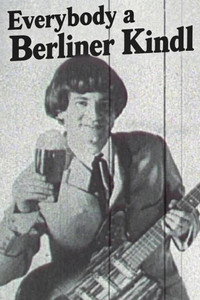
Poster for Everybody a Berliner Kindl (1966) 1 5m

Everybody a Berliner Kindl

1966

1

Everybody a Berliner Kindl

1966 · 5m

Advertising posters for the Berliner Kindl brewery in the stands of Berlin’s sports arena show beer drinkers through the ages, from an organ-grinder at the turn of the 20th century to a fashionable "Beatle wannabe". A critical analysis of the images leads to the parody motto "Berliner Kindl is a swindle".

View details
Poster for Two Paths (1966) 2 3m

Two Paths

1966

2

Two Paths

1966 · 3m

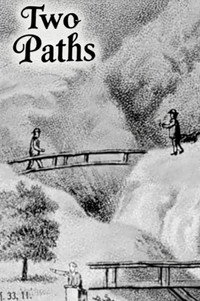
This short piece for the television station Sender Freies Berlin (SFB) is highly relevant to Farocki's later work. Zwei Wege is a cheeky description of a picture; Farocki shows us an image, a religious allegory showing the 'right' and the 'wrong' path for a Christian. The one path leads to heaven, the other to hell. Farocki uses the camera in effect to dissect the picture; he shows close-ups of the paintings various motifs, which he underscores with rhymes. This method of breaking down an image with the camera reminds us of similar sequences in his essay films, namely Wie man sieht and Bilder der Welt und Inschrift des Krieges.

View details
Poster for The Campaign Volunteer (1967) 3 8m

The Campaign Volunteer

1967

3

The Campaign Volunteer

1967 · 8m

Der Wahlhelfer deals with the development of a young trainee lawyer and FDP (Free Democrat Party) supporter who becomes a revolutionary.

View details
Poster for Their Newspapers (1968) 4 18m

Their Newspapers

1968

4

Their Newspapers

1968 · 18m

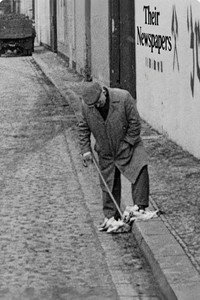
Ihre Zeitungen is a political film rooted in the 1968 student campaign against the Springer press group, which controlled popular dailies such as the Berliner Zeitung and the Bild Zeitung. Claiming the latter were manipulating public opinion, the students laid siege to the publisher's offices. These events made a strong impression on the German collective conscience, and it's in this context that Farocki made this "agit-prop" film.

View details
Poster for White Christmas (1968) 5 4m

White Christmas

1968

5

White Christmas

1968 · 4m

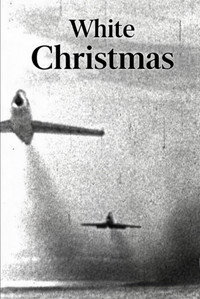
One of the many films drawing a connection between Christmas and war. It is unclear whether the longing for a white Christmas is being taken seriously, or whether it is intended as a denunciation. In either event, America's war in Vietnam is denounced.

View details
Poster for Instructions on how to Pull off Police Helmets (1969) 6 2m

Instructions on how to Pull off Police Helmets

1969
6

Instructions on how to Pull off Police Helmets

1969 · 2m

According to Fritz J. Raddatz, Rosa Luxemburg cried when she read Marx's concept of value. I was just as disappointed by the Cine-Tracts made in May 1968 in Paris and shown shortly afterwards in Berlin.

View details
Poster for The Inextinguishable Fire (1969) 7 22m

The Inextinguishable Fire

1969

7

The Inextinguishable Fire

1969 · 22m

An austere treatise on the military-industrial complex that produces napalm.

View details
Poster for Untitled or: Nixon Comes to Berlin (1969) 8 3m

Untitled or: Nixon Comes to Berlin

1969
8

Untitled or: Nixon Comes to Berlin

1969 · 3m

View details
Poster for Something Self Explanatory (15x) (1971) 9 1h 4m

Something Self Explanatory (15x)

1971
9

Something Self Explanatory (15x)

1971 · 1h 4m

An educational film about an aspect of political economy. The concepts of use value, barter value and labor as a commodity are the subjects; they are intended to introduce the process of understanding the theory of value of work and the law of values, alienation and fetish.

View details
Poster for Brunner is Next (1973) 10 17m

Brunner is Next

1973

10

Brunner is Next

1973 · 17m

A cinematic interpretation and literary adaptation of a text by Charles Baudelaire. "I had intended that each of the roughly 60 shots would be static, without even the imperceptible correction pans normally used in such cases. Every shot was to be a tangent, of which one must put an infinite number around a circle if it is to be calculated incrementally. One cannot represent a circle with straight shots, the most one can do is make it imaginable – this could be a righteous insight into the limitations of our means, although hopefully not self-righteously presented."

View details
Poster for A Picture of Sarah Schumann (1978) 11 30m

A Picture of Sarah Schumann

1978
11

A Picture of Sarah Schumann

1978 · 30m

This Harun Farocki film shows the creation of a picture on which the artist worked for nine weeks. Sarah Schumann lives in Berlin and is a pioneer of the feminist scene. 1977 together with several other artists she organized the first large exhibition in which only work by women was shown. Sarah Schumann paints figuratively, that is to say she has developed a technique using layers of collage and painting worked on top of and into one another. Regarding a picture becomes an adventure. (harunfarocki.de)

View details
Poster for Between Two Wars (1978) 12 1h 23m

Between Two Wars

1978

12

Between Two Wars

1978 · 1h 23m

A film about the time of the blast furnaces – 1917–1933 – about the development of an industry, about perfect machinery which had to run itself to the point of its own destruction.

View details
Poster for Industry and Photography (1979) 13 44m

Industry and Photography

1979

13

Industry and Photography

1979 · 44m

Farocki frequently chooses a single news photo as his pretext. In his film he explains convincingly that 'learning from images' is not so much a question of having power over the image or a consistent subject-position towards the image, which would allow the filmmaker access to complete knowledge. Instead he insists on pursuing photography's separation of reference and discourse, by proving this to be a separation of the subject as well as a separation within the subject itself. [...] - Thomas Elsaesser

View details
Poster for The Taste of Life (1979) 14 29m

The Taste of Life

1979

14

The Taste of Life

1979 · 29m

For years I've been looking for the means to capture everyday life just as it is perceived through a glance from the street. Twenty years ago, you could see young people standing with their bicycles on street corners, in fact, if the bicycles where there, you could be sure to find the young people standing there talking. I would like to document these kinds of events. On this occasion, I was presented with the opportunity to do so. For two and a half weeks, I walked around different parts of the city with my camera and collected images for the film. (Harun Farocki, 1979)

View details
Poster for Before Your Eyes - Vietnam (1982) 15 1h 54m

Before Your Eyes - Vietnam

1982
15

Before Your Eyes - Vietnam

1982 · 1h 54m

An unconventional essay film that interrogates the visual and ideological legacy of the Vietnam War. Blending staged scenes, archival footage, photographs, and philosophical dialogue, the film follows various characters — including an American soldier captured by North Vietnamese villagers — as they reflect on violence, memory, and image-making. Set partly in West Berlin and partly in reconstructed spaces representing Vietnam, the film avoids traditional dramatic narrative in favor of a fragmented montage of voices, documents, and reenactments. Interweaving love stories, political debate, and historical commentary, Farocki creates a critical reflection on how war is represented, seen, and imagined, both in cinema and in public consciousness. The result is a complex meditation on images as weapons and instruments of perception.

View details
Poster for An Image (1983) 16 25m

An Image

1983

16

An Image

1983 · 25m

A documentation during four days of the creation of a Playboy magazine centerfold photograph from start to finish.

View details
Poster for Jean-Marie Straub and Danièle Huillet at Work on a Film Based on Franz Kafka’s Amerika (1983) 17 26m

Jean-Marie Straub and Danièle Huillet at Work on a Film Based on Franz Kafka’s Amerika

1983
17

Jean-Marie Straub and Danièle Huillet at Work on a Film Based on Franz Kafka’s Amerika

1983 · 26m

This film is at once a self-portrait and an homage to Jean-Marie Straub, Farocki's role model and former teacher at the Film Academy.

View details
Poster for The Double Face of Peter Lorre (1984) 18 59m

The Double Face of Peter Lorre

1984
18

The Double Face of Peter Lorre

1984 · 59m

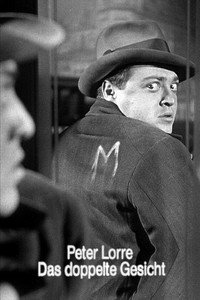
Peter Lorre achieved international fame for his performance in the myth-making role in M. This character has held a peculiar fascination for generations of cinephiles. However, at the time, whilst such success meant recognition, it also weighed on the Hungarian actor as a constrictive burden. Using photographs and film extracts, Das doppelte Gesicht reconstructs the ups and downs of Lorre's career, taking into consideration the economic imperatives and workings of the film industry at the time. (Arnold Hohmann, 1984)

View details
Poster for Betrayed (1985) 19 1h 39m

Betrayed

1985

19

Betrayed

1985 · 1h 39m

A “film-noir” on double identity and role reversal. A man is looking for a woman to love. He finds her in a seedy bar and persuades her to marry him. The day she decides to flee… he kills her. To ward off suspicion, he moves in with the sister of the deceased.

View details
Poster for As You See (1986) 20 1h 12m

As You See

1986

20

As You See

1986 · 1h 12m

In 'As You See', Farocki searches for those instances and facts in the history of technology that have been overlooked or ignored, also exploring the ambivalent relationship between technologies developed for civil use and those designed for military purposes. Thus the film for instance describes how in the 1970s workers at the British arms factory Lucas Aerospace attempted to develop socially useful products to replace the company's military output. Rather than following a linear argument, this essay-film juxtaposes disparate images and weaves them into a mosaic-like structure which makes it possible for the viewers to make their own connections between the different images as well as between the images and the commentary.

View details
Poster for Schlagworte – Schlagbilder. Ein Gespräch mit Vilém Flusser (1986) 21 13m

Schlagworte – Schlagbilder. Ein Gespräch mit Vilém Flusser

1986
21

Schlagworte – Schlagbilder. Ein Gespräch mit Vilém Flusser

1986 · 13m

Harun Farocki sits down with Vilém Flusser to discuss the front page of the German tabloid newspaper Bild Zeitung.

View details
Poster for Die Menschen stehen vorwärts in den Straßen (1987) 22 8m

Die Menschen stehen vorwärts in den Straßen

1987
22

Die Menschen stehen vorwärts in den Straßen

1987 · 8m

A film based on the poem of the same name by Georg Heym (1911).

View details
Poster for Georg K. Glaser – Writer and Smith (1988) 23 44m

Georg K. Glaser – Writer and Smith

1988
23

Georg K. Glaser – Writer and Smith

1988 · 44m

Portrait of Georg Glaser, who is a writer in the mornings and a blacksmith in the afternoons.

View details
Poster for How to Live in the German Federal Republic (1990) 24 1h 23m

How to Live in the German Federal Republic

1990
24

How to Live in the German Federal Republic

1990 · 1h 23m

A series of 32 short scenes, uniformly set in West German instructional and training classes, that show various tasks among the citizenry being done solely as the result of exhaustive preparation - everything from women preparing to give birth, to strippers stripping, to policemen making arrests. Farocki uses the material to savagely dissect the West German mode of life.

View details
Poster for Images of the World and the Inscription of War (1991) 25 1h 14m

Images of the World and the Inscription of War

1991
25

Images of the World and the Inscription of War

1991 · 1h 14m

Farocki’s intriguing and troubling film explores the processes of visual perception and how they affect our understanding of history and society. In a work reminiscent of the writings of Paul Virilio and Michel Foucault, Farocki examines a range of phenomena including aerial reconnaissance photos of the Auschwitz concentration camp.

View details
Poster for Camera and Reality (1992) 26 3h 6m

Camera and Reality

1992

26

Camera and Reality

1992 · 3h 6m

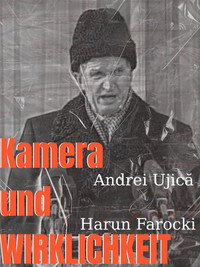
Harun Farocki and Andrei Ujica discuss the visual material of the 1989 Romanian revolution they used for Videogramme einer Revolution (1992) in a round table discussion with Andrei Pleșu, Romania’s first cultural minister after the revolution, and media scholars Friedrich Kittler, Manfred Schneider and Peter M. Spangenberg.

View details
Poster for Videograms of a Revolution (1992) 27 1h 46m

Videograms of a Revolution

1992

27

Videograms of a Revolution

1992 · 1h 46m

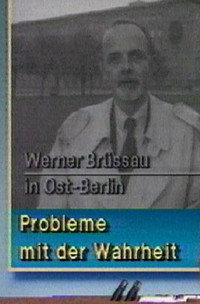
A minute-by-minute chronology of the Romanian revolution in December 1989 in Bucharest. This cinematic montage of live footage from the state television company TVR and video taken by numerous amateurs becomes a new media-based form of historiography.

View details
Poster for A Day in the Life of a Consumer (1993) 28 44m

A Day in the Life of a Consumer

1993
28

A Day in the Life of a Consumer

1993 · 44m

The film shows one day from waking up in the morning all the way to waking up again the next morning. The everyday situations that many commercials are made of, the little dramas that they create and solve through the product or service they sell, are stitched together into one day. This is a film about the everyday in (German, or Western-European) society because the commercials are part of the everyday of most people (everyone who watches television) and they depict an ideal image of society. The film abundantly uses repetition as an editing technique, in visual ways as described above, but also because commercials can be read in different ways. For instance, Brat baking foil shows up at the evening dinner sequence, when an ovendish is put on the table, and again later on in the sequence about going out to a classic concert, because the clip has classic music.

View details
Poster for The Leading Role (1994) 29 35m

The Leading Role

1994

29

The Leading Role

1994 · 35m

1989, the fall of the Berlin wall. Television crews trying, for days on end, to get an emblematic image which would crystallise the event: to no avail. Five years later, Farocki delivers a montage film of this footage, trying to define this ‚absent image'. "Today, 5 years later, this material shows the extent to which the collective conscience was affected by the event, as well as all the efforts made to repress the trauma" declares the filmmaker.

View details
Poster for Interface (1995) 30 25m

Interface

1995

30

Interface

1995 · 25m

Harun Farocki was commissioned by the Lille Museum of Modern Art to produce a video 'about his work'. His creation was an installation for two screens that was presented within the scope for the 1995 exhibition The World of Photography. The work Schnittstelle developed out of that installation. Reflecting on Farocki's own documentary work, it examines the question of what it means to work with existing images rather than producing one's own, new images. The title plays on the double meaning of 'Schnitt', referring both to Farocki's workplace, the editing table, as well as the 'human-machine interface', where a person operates a computer using a keyboard and a mouse.

View details
Poster for Workers Leaving the Factory (1995) 31 36m

Workers Leaving the Factory

1995
31

Workers Leaving the Factory

1995 · 36m

Using one of the Lumière Brothers' first films of workers leaving the Factory as his starting point, Farocki provides an insight to changes in industrial production, workers' strikes and motion pictures-- via images of workers leaving factories throughout the years.

View details
Poster for The Appearance (1996) 32 40m

The Appearance

1996

32

The Appearance

1996 · 40m

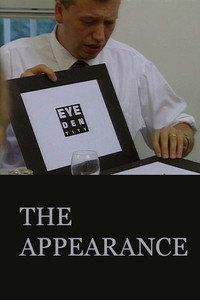
An advertising agency has to pitch a marketing concept to an optician's consortium, represented by the manager who is the first to see the campaign. The logo submitted is examined from every angle: it must simultaneously express both the company's dynamism and its reliability. A fascinating, dispassionate glimpse behind closed doors, where every detail is dramatized to win that lucrative contract.

View details
Poster for Still Life (1997) 33 58m

Still Life

1997

33

Still Life

1997 · 58m

According to Harun Farocki, today's photographers working in advertising are, in a way, continuing the tradition of 17th century Flemish painters in that they depict objects from everyday life - the "still life". The filmmaker illustrates this intriguing hypothesis with three documentary sequences which show the photographers at work creating a contemporary "still life": a cheese-board, beer glasses and an expensive watch.

View details
Poster for The Expression of Hands (1997) 34 30m

The Expression of Hands

1997

34

The Expression of Hands

1997 · 30m

Historically, the cinema close-up was initially employed to convey emotions through facial expressions. But soon filmmakers also began focusing their attention on hands. Using film extracts, Farocki explores this visual language, its symbolism, Freudian slips, automatisms and its music. Often, hands betray an emotion which the face tries to dissimulate. They can also function as a conduit (exchanging money) or witness to a form of competence (work).

View details
Poster for Words and Games (1998) 35 1h 8m

Words and Games

1998

35

Words and Games

1998 · 1h 8m

The new production plants for the daily chat- and game shows are on the periphery; in the case of Unterföhring near Munich on the extension to the Bahnhofstraße named Medienallee (Media Avenue). This industry is so new, that it cannot as yet reliably predict costs and extra costs, profits and extra profits; its most important raw material is the ordinary, everyday person. They are cheap and they want to make an appearance, but are they worth showing?

View details
Poster for I Thought I Was Seeing Convicts (2000) 36 26m

I Thought I Was Seeing Convicts

2000
36

I Thought I Was Seeing Convicts

2000 · 26m

Images from the maximum-security prison in Corcoran, California. A surveillance camera shows a pie-shaped segment of the concrete yard where the prisoners, dressed in shorts and mostly shirtless, are allowed to spend half an hour a day. When one convict attacks another, those not involved lay flat on the ground, arms over their heads. They know that when a fight breaks out, the guard calls out a warning and then fires rubber bullets. If the fight continues, the guard shoots real bullets. The pictures are silent, the trail of gun smoke drifts across the picture. The camera and the gun are right next to each other.

View details
Poster for Prison Images (2000) 37 1h

Prison Images

2000

37

Prison Images

2000 · 1h

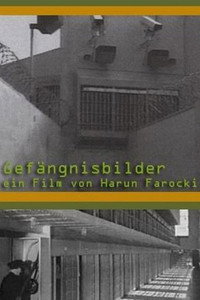
A film composed of images from prisons. Quotes from fiction films and documentaries as well as footage from surveillance cameras. A look at the new control technologies, at personal identification devices, electronic ankle bracelets, electronic tracking devices.

View details
Poster for Eye / Machine I (2001) 38 25m

Eye / Machine I

2001

38

Eye / Machine I

2001 · 25m

The work centers on the images of the Gulf War which caused worldwide sensation in 1991. In the shots taken from projectiles homing in on their targets, bomb and reporter were identical, according to a theory put forward by the philosopher Klaus Theweleit. At the same time it was impossible to distinguish between the photographed and the (computer) simulated images. The loss of the 'genuine picture' means the eye no longer has a role as historical witness. It has been said that what was brought into play in the Gulf War was not new weaponry but rather a new policy on images. In this way the basis for electronic warfare was created...

View details
Poster for The Creators of the Shopping Worlds (2001) 39 1h 12m

The Creators of the Shopping Worlds

2001
39

The Creators of the Shopping Worlds

2001 · 1h 12m

A look at how mall producers design malls in order to maximise traffic and sales.

View details
Poster for Eye / Machine II (2002) 40 15m

Eye / Machine II

2002

40

Eye / Machine II

2002 · 15m

In Eye/Machine II, Farocki has brought together visual material from both military and civilian sectors, showing machines operating intelligently and what it is they see when working on the basis of image processing programs. The traditional man-machine distinction becomes reduced to "eye/machine"" where cameras are implanted into the machines as eyes. As a result of the Gulf War, the technology of warfare came to provide an innovative impulse, which boosted the development of civilian production. Farocki shows us computer simulated images looking like something out of science-fiction films: rockets steer towards islands set in a shining sea; apartment blocks are blown up; fighter aircraft fire at one another with rockets and defend themselves with virtual flares.

View details
Poster for Eye / Machine III (2003) 41 25m

Eye / Machine III

2003

41

Eye / Machine III

2003 · 25m

The third part of the Eye/Machine cycle structures the material around the concept of the operational image. These are images which do not portray a process but are themselves part of a process. As early as the Eighties, cruise missiles used a stored image of a real landscape then took an actual image during flight, the software compared the two images. A comparison between idea and reality, a confrontation between pure war and the impurity of the actual. This confrontation is also a montage and montage is always about similarity and difference. Many operational images show coloured guidance lines, intended to portray the work of recognition. The lines tell us emphatically what is all important in these images, and just as emphatically what is of no importance at all. Superfluous reality is denied – a constant denial provoking opposition.

View details
Poster for War at a Distance (2003) 42 58m

War at a Distance

2003

42

War at a Distance

2003 · 58m

In 1991, when images of the Gulf War flooded the international media, it was virtually impossible to distinguish between real pictures and those generated on computer. This loss of bearings was to change forever our way of deciphering what we see. The image is no longer used only as testimony, but also as an indispensable link in a process of production and destruction. This is the central premise of "War at a Distance", which continues the deconstruction of claims to visual objectivity Harun Farocki developed in his earlier work. With the help of archival and original material, Farocki sets out in effect to define the relationship between military strategy and industrial production and sheds light on how the technology of war finds applications in everyday life.

View details
Poster for Nothing Ventured (2004) 43 50m

Nothing Ventured

2004

43

Nothing Ventured

2004 · 50m

What venture capital or VC for short actually means is explained in the film itself. Banks only lend money against collateral. Those who have none have to turn to VC companies and pay interest of 40%.

View details
Poster for Aufstellung (2005) 44 17m

Aufstellung

2005

44

Aufstellung

2005 · 17m

The diagrams used to help represent consumer shopping baskets, the pensions deficit or migration are anachronistic, Farocki posits; Whether pictographs or simple bar or pie charts, their abstractions all display an impotence of information. "Examples of diagrams gleaned from newspapers, school text books and official publications are [...] the history of migration in the Federal Republic of Germany. What we are seeking, therefore, is a conceptual critique of the ways in which migration is presented, pursuing the icons and symbols back to their origins and examining them with regard to content they themselves are unaware of." -HF

View details
Poster for Memories (2007) 45 1h 42m

Memories

2007

45

Memories

2007 · 1h 42m

Previously focused on Asian directors, “Jeonju Digital Project 2007” takes a look at Europe. The Portuguese filmmaker Pedro Costa, the German filmmaker Harun Farocki, and the French filmmaker Eugène Green participated in this project.

View details
Poster for Respite (2007) 46 40m

Respite

2007

46

Respite

2007 · 40m

Respite consists of silent black-and-white film shot at Westerbork, a Dutch refugee camp established in 1939 for Jews fleeing Germany. In 1942, after the occupation of Holland, its function was reversed by the Nazis and it became a 'transit camp.' In 1944, the camp commander commissioned a film, shot by a photographer, Rudolph Breslauer. “By exhuming the scattered fragments and traces of the phantom film (intertitle cards, ideas for the scenario, graphic elements), Harun Farocki inscribes the Dutch footage within the genre of the corporate film.

View details
Poster for Übertragung (2007) 47 43m

Übertragung

2007

47

Übertragung

2007 · 43m

Examines monuments scattered all over the world that have become goals for pilgrims and tourists and now serve to meet a whole range of different needs, from personal memory to spiritual enlightenment and religious sentiment. Farocki starts from the Vietnam Memorial in Washington ... thousands of people visit it every day, touch the letters and trace the names of family and friends in an attempt to establish a link between their own lives and the past. Other objects of pilgrimage – including the foot of the statue of the Apostle in St Peter’s and the Bocca della Verità in Rome as well as the devil’s footprint in the Frauenkirche in Munich and the monument in the Buchenwald concentration camp – meet the same need for understanding and purification. Stone is the material in which the collective memory of a life or an event in the past is immortalized and becomes an object of worship. At the same time, the memory of thousands of visitors is preserved in the traces of wear it displays.

View details
Poster for In Comparison (2009) 48 1h 1m

In Comparison

2009

48

In Comparison

2009 · 1h 1m

In Comparison revisits issues explored in the director's 2007 two channel installation Comparison Via a Third. Spanning continents and cultures, the film focuses on the brick in its many contexts, from the collective efforts of a community building a clinic in Burkina Faso, through semi industrialized moldings in India, to industrial production lines in Germany, France, Austria and Switzerland. Through its notable structure and its captivating rhythms, In Comparison presents various methods of labor production, allowing for an assessment that changes with every layer and goes well beyond a simple binary divide.

View details
Poster for Serious Games 1 – "Watson Is Down" (2010) 49 8m

Serious Games 1 – "Watson Is Down"

2010
49

Serious Games 1 – "Watson Is Down"

2010 · 8m

An exploration of how the U.S. military employs video game technology to train troops for war. Filmed at the United States Marine Corps Air Ground Combat Center, Watson is Down pairs footage of soldiers at computers engaging in combat-simulation training with scenes from the video games.

View details
Poster for Serious Games 2 – Three Dead (2010) 50 8m

Serious Games 2 – Three Dead

2010
50

Serious Games 2 – Three Dead

2010 · 8m

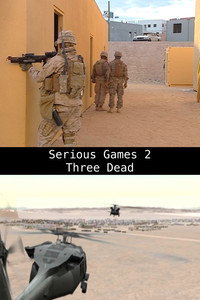
An exploration of how the U.S. military employs video game technology to train troops for war. Three Dead depicts a military exercise within a mock Iraqi town built on the outskirts of Twentynine Palms, California, blurring the line between computer simulation and reality.

View details
Poster for Serious Games 3 – Immersion (2010) 51 20m

Serious Games 3 – Immersion

2010
51

Serious Games 3 – Immersion

2010 · 20m

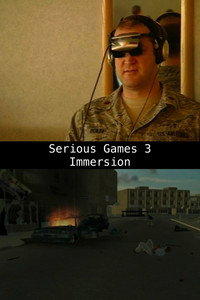
An exploration of how the U.S. military employs video game technology to train troops for war. In Immersion, Farocki presents footage of a role-playing exercise in which military psychologists demonstrate how to use the PTSD program on their colleagues, who describe traumatic wartime experiences. On a second channel, their descriptions play out as virtual renderings.

View details
Poster for Serious Games 4 – A Sun With No Shadow (2010) 52 7m

Serious Games 4 – A Sun With No Shadow

2010
52

Serious Games 4 – A Sun With No Shadow

2010 · 7m

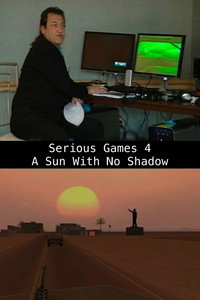
An exploration of how the U.S. military employs video game technology to train troops for war. In A Sun With No Shadow, Farocki calls attention to the subtle differences between the simulations for combat training and PTSD. With the former, the sun can be programmed to cast shadows in the virtual combat zones, while the latter, less expensive technology does not offer this feature.

View details
Poster for A New Product (2012) 53 36m

A New Product

2012

53

A New Product

2012 · 36m

A New Product is a corporate documentary, or, that is, a document of corporate qualities; specifically about what seems to be a small company whose purpose is to consult and design working spaces for larger corporations, exemplified by Vodafone and Unilever.

View details
Poster for Parallel I–IV (2014) 54 43m

Parallel I–IV

2014

54

Parallel I–IV

2014 · 43m

Cinema’s onscreen worlds have always borne an indexical bond to the real. What happens when computer-generated video game images usurp film as the predominant medium of visual world-making? How does one’s relation to onscreen heroes shift when we no longer identify with real bodies? Harun Farocki’s four-part Parallel I–IV (2012–14) takes up these questions, tracing how, in just over 30 years, video games have developed from two-dimensional schematics to photorealistic environments.

View details
Poster for About Narration (2025) 55 58m

About Narration

2025

55

About Narration

2025 · 58m

Interdisciplinary studies put into practice is a plane on which HaF's interests and mine coincide. Ideas of fictional research projects in films emerge very early on, or of film as research device, allowing people from different disciplines to come together and discover something, to pursue a line of thought, or just be adventurous. These ideas correspond to a tendency we both have of accumulating knowledge from different sciences, for example so as to bring exact sciences like medicine together with subjects which aren't directly aimed at application, such as religious studies or anthropology.

View details
Poster for Make Up (2025) 56 29m

Make Up

2025

56

Make Up

2025 · 29m

“The make-up artist Serge Lutens is shown covering a model’s face with powder then working it into her face over several minutes. The face becomes a canvas, primed for painting. Flesh is turned into something different, looking like marble. It seems as though life has to be frozen in order to achieve beauty.” –Harun Farocki

View details
Poster for Remember Tomorrow is the First Day of the Rest of Your Life (2025) 57 10m

Remember Tomorrow is the First Day of the Rest of Your Life

2025
57

Remember Tomorrow is the First Day of the Rest of Your Life

2025 · 10m

“Farocki’s ten-minute short film is composed of shots of an AFN DJ at work…and of a car ride, whereby the camera points out of the car (through the windscreen or the side windows) or it captures and tracks a passing car.” –Gero Günther

View details
Poster for The Words of the Chairman (2025) 58 3m

The Words of the Chairman

2025

58

The Words of the Chairman

2025 · 3m

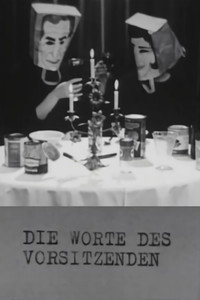
I was on a ship – this sounds like a novel: I had just embarked for Venezuela on June 2, 1967 as the Shah of Iran was arriving in West Berlin. There were protests, a student was shot, and a new form of opposition movement came into existence. The idea for this film came to me while I was still aboard the ship. The film is structured like a commercial. The film takes a metaphor literally: words can become weapons. However, it also shows that these weapons are made of paper. The weapon spoiled everything for the Shah and his wife, they are wearing paper bags on their heads with faces drawn on them – the kind of bags worn by Iranian students during demonstrations to hide their identity from the Savak, the Iranian Secret Service. When I showed this film to the audiences in the late 60s, it was highly praised. I think people understood then that over obviousness is also a form of irony. This capacity was lost a few years later. I think it's coming back today. –HF

View details