Skip to content

ReelRoute Auto-generated
Ted Nemeth
Ted Nemeth
22 February 1910 – 31 December 1986 | Cambridge, Massachusetts, USA
8 films in this ReelRoute

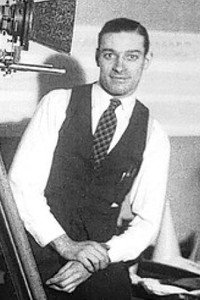
Ted Nemeth was an early animation pioneer and cinematographer born on 22 February 1910 in Cambridge, Massachusetts, USA. He was known for Passages from James Joyce's Finnegans Wake (1966), Mood Contrasts (1953) and Color Rhapsodie (1948). He was married to Mary Ellen Bute.

Filmography for Ted Nemeth, sourced from TMDB.

This automatically generated ReelRoute is a starting point, not a complete filmography.

Generated from TMDB director credits, not curated.
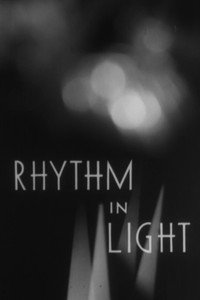
Poster for Rhythm in Light (1934) 1 5m

Rhythm in Light

1934

1

Rhythm in Light

1934 · 5m

Screen titles introduce the film as a modern artist's impressions of what goes on in the mind while listening to music. Grieg's "Peer Gynt Suite" accompanies images of common objects and abstract forms photographed in soft focus and through prisms: rings, pyramids, the staff of musical notes, and floating lights are all seen in multiple images, sometimes as if through a kaleidoscope, other times as if in animation. Images appear and patterns move across the screen. Sparklers celebrate at the film's end.

View details
Poster for Escape (Synchronomy No. 4) (1937) 2 4m

Escape (Synchronomy No. 4)

1937

2

Escape (Synchronomy No. 4)

1937 · 4m

To the toccata portion of Bach's "Toccata and fugue in D minor," we watch a play of sorts. Blue smoke forms a background; a grid of black lines is the foreground. Behind the lines, a triangle appears, then patterns of multiple triangles. Their movements reflect the music's rhythm. Behind the barrier of the black lines, the triangle moves, jumps, and takes on multiple shapes. In contrast with the blue and the black, the triangles are warm: orange, red, yellow. The black lines bend, swirl into a vortex, then disappear. The triangle pulsates and a set of many of them rises.

View details
Poster for Parabola (1937) 3 10m

Parabola

1937

3

Parabola

1937 · 10m

Parabola is a celebration of film’s ability to create new ways of seeing the forms around us. Creating juxtapositions between light/shadow, stasis/motion, and form/music, this black-and-white short invites us to see the parabolic curve, or “nature’s poetry,” as both invigorating and beguiling.

View details
Poster for Spook Sport (1940) 4 8m

Spook Sport

1940

4

Spook Sport

1940 · 8m

It's midnight in a graveyard. The principal characters are spooks, ghosts, bats, bells, and, at the end, the sun. As midnight strikes, 12 spooks appear, then two ghosts. They move to the music's rhythm. Against the black night, they are blue and yellow. Bats appear as does a xylophone of bones. Mist rises, spooks swirl. A bell tolls. The sky turns light blue, the ghosts' dance slows. Then black night returns bringing intimations of frenzy. Bones play snare drums; spooks peek out of square graves. Scary faces appear. Frenetic movement takes over. A rooster crows and all return to earth as the sun's light appears.

View details
Poster for Tarantella (1940) 5 5m

Tarantella

1940

5

Tarantella

1940 · 5m

Here the artist creates a world of color, form, movement and sound in which the elements are in a state of controllable flux, the two materials (visual and aural) are subject to any conceivable interrelation and modification.

View details
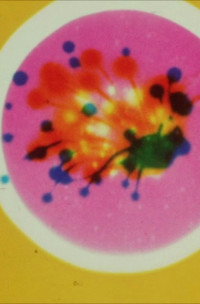
Poster for Color Rhapsodie (1948) 6 6m

Color Rhapsodie

1948

6

Color Rhapsodie

1948 · 6m

Mary Ellen Bute, Color Rhapsodie (1948)

View details
Poster for Abstronic (1952) 7 6m

Abstronic

1952

7

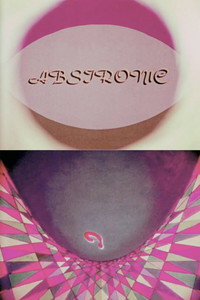
Abstronic

1952 · 6m

A pioneer of visual music and electronic art, Mary Ellen Bute produced over a dozen short abstract animations between the 1930s and the 1950s. Set to classical music by the likes of Bach, Saint-Saëns, and Shoshtakovich, and replete with rapidly mutating geometries, Bute’s filmmaking is at once formally rigorous and energetically high-spirited, like a marriage of high modernism and Merrie Melodies. In the late 1940s, Lewis Jacobs observed that Bute’s films were “composed upon mathematical formulae depicting in ever-changing lights and shadows, growing lines and forms, deepening colors and tones, the tumbling, racing impressions evoked by the musical accompaniment.” Bute herself wrote that she sought to “bring to the eyes a combination of visual forms unfolding along with the thematic development and rhythmic cadences of music.”

View details
Poster for New Sensations in Sound by RCA Victor (1956) 8 3m

New Sensations in Sound by RCA Victor

1956

8

New Sensations in Sound by RCA Victor

1956 · 3m

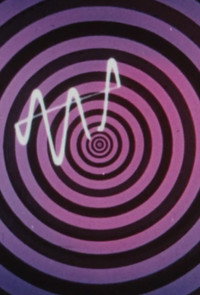
"Bute’s most compact abstract film energizes a jazzy ad jingle to promote RCA’s new stereo recordings! The barrage of visuals features a panoply of animated techniques among which eloquent oscilloscope patterns dance in complex synchronization to the music." — Bruce Posner

View details