Skip to content

ReelRoute Auto-generated
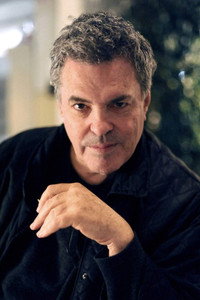
Amos Gitai
Amos Gitai
31 films in this ReelRoute

Filmography for Amos Gitai, sourced from TMDB.

This automatically generated ReelRoute is a starting point, not a complete filmography.

Generated from TMDB director credits, not curated.
Poster for House (1980) 1 51m

House

1980

1

House

1980 · 51m

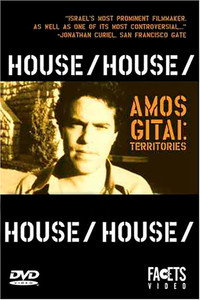
House is the story of a house in West-Jerusalem: abandoned during the 1948 war by its owner, a Palestinian doctor; requisitioned by the Israeli government as "vacant'; rented to Jewish Algerian immigrants in 1956; purchased by a university professor who undertakes its transformation into a patrician villa... The building site is like a theatre in which the former inhabitants, the neighbours, the workers, the builder and the new owner all appear. Israeli television censured the film. "Gitai wants this house to be both a symbol and something very concrete; he wants it to become a character in a film. He achieves one of the most beautiful things a camera can register 'live', as it were; people who look at the same thing but see different things - and who are moved by that vision. In this crumbling shell of a house, real hallucinations begin to take shape. The film's central idea is simple and the film has simply the force of that idea, no more, no less."

View details
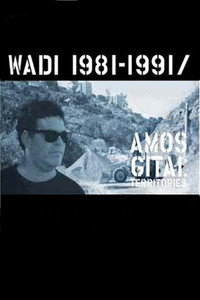
Poster for Wadi (1981) 2 41m

Wadi

1981

2

Wadi

1981 · 41m

Wadi is a valley located east of Haifa. A former stone quarry, it is a sort of enclave where Eastern European immigrants, survivors of the camps, live in a state of fragile coexistence with Arabs who have also been expelled from their homes.

View details
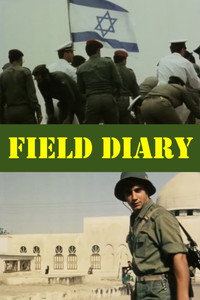
Poster for Field Diary (1982) 3 1h 23m

Field Diary

1982

3

Field Diary

1982 · 1h 23m

The story of various journeys through the West Bank and Gaza Strip occupied territories during the months leading up to Israel's invasion of Lebanon.

View details
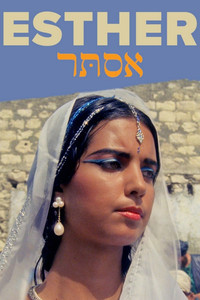
Poster for Esther (1986) 4 1h 37m

Esther

1986

4

Esther

1986 · 1h 37m

Ahasverus, king of Persia and Media, puts aside Vashti and makes Esther his queen, choosing her among maidens in a kingdom stretching from India to Ethiopia. Esther, using information from Mordecai, her uncle and patron, saves the king from assassination. Haman, the king's favorite, is miffed when Mordecai won't bow to him, so he orders death to all Jews in the kingdom, under the seal of the king. Esther pleads for her people, and Mordecai is in turn given license to make his own edict under the king's seal. Mordecai loses sight of his original intention, and bloody murder ensues. Purim annually celebrates the story. At the end of the film, the actors comment.

View details
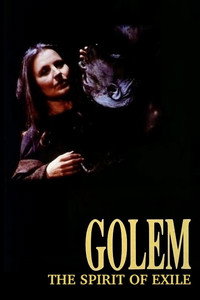
Poster for Golem, the Spirit of Exile (1992) 5 1h 45m

Golem, the Spirit of Exile

1992
5

Golem, the Spirit of Exile

1992 · 1h 45m

An allegory of the Golem, a Jewish mythical creature personifying displacement and exile, this film tells the story of a woman (similar to the biblical Ruth) and her sisters, who are forced into exile after the death of their husbands. It is set in 1990s Paris, where the director was living in self-imposed exile following the ban on his 1982 documentary in Israel. The recurring theme of the film is migrations and unrooting, like the legendary Golem.

View details
Poster for Golem: The Petrified Garden (1993) 6 1h 27m

Golem: The Petrified Garden

1993
6

Golem: The Petrified Garden

1993 · 1h 27m

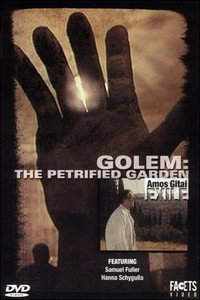
Danny Cornish, a sort of stateless man who arranges art exhibits, is called from Tel Aviv to Paris with the news that a great uncle has died, in Birobidjan, the autonomous Jewish zone in Russia, leaving him a valuable art collection and the hand of a huge sculpture of a Golem. The uncle's will instructs Danny to find the rest of the statue, so Danny, who speaks no Russian, embarks on a trip that takes him (and the Golem's hand) to Moscow, St. Petersburg, and Siberia, fumbling with hotel clerks, taxi drivers, and bureaucrats, following leads, and making discoveries about myth, story telling, art, and hope.

View details
Poster for In the Valley of the Wupper (1994) 7 1h 36m

In the Valley of the Wupper

1994
7

In the Valley of the Wupper

1994 · 1h 36m

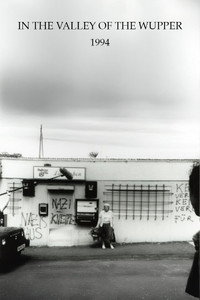
Following the 1992 killing of a man mistakenly believed to be Jewish, Amos Gitai interviews residents, witnesses, and legal figures in Wuppertal. Avoiding direct depiction of the crime or its perpetrators, the film examines how fear, denial, and everyday attitudes expose deeper currents of xenophobia in contemporary Germany.

View details
Poster for Things (1995) 8 1h 50m

Things

1995

8

Things

1995 · 1h 50m

The story of three men living in Tel Aviv. They set off to attend a funeral. Unfortunately, they cannot find the right cemetery. Later the story shifts to their complex love lives.

View details
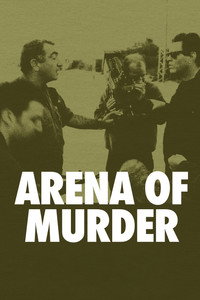
Poster for The Arena of Murder (1996) 9 1h 20m

The Arena of Murder

1996

9

The Arena of Murder

1996 · 1h 20m

This documentary by Amos Gitai is a personal look at the aftermath of the Rabin assassination.

View details
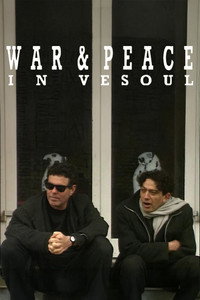
Poster for War and Peace in Vesoul (1997) 10 1h 16m

War and Peace in Vesoul

1997
10

War and Peace in Vesoul

1997 · 1h 16m

In the train on the way to the Festival in Vesoul, filmmakers Amos Gitai and Elia Suleiman talk about the subjects that preoccupy them: war and peace in the Middle East, their film projects, their cities, their private lives… In Vesoul, the French welcome is rather comical and the questions of war and peace in the Middle East create misunderstandings: through a kind of inverted exoticism, we end up wondering who is really the “stranger” in this story.

View details
Poster for A House in Jerusalem (1998) 11 1h 30m

A House in Jerusalem

1998

11

A House in Jerusalem

1998 · 1h 30m

Can a house be a metaphor for Arab-Jewish relations in Israel? Amos Gitai returns to the house in West Jerusalem he profiled in 1980. He interviews members of the Jewish families who live there, and he talks with the Arab family who lived in the house until 1948. They are now in East Jerusalem and pay a nearly furtive visit to the street in front of their old house. Gitai also interviews Palestinian laborers at work on renovations and excavating an old tunnel to the Holy Mount. What do people think of each other, what do they think of Israel, what do they think of co-existence? Do the current residents know the house's history?

View details
Poster for Day After Day (1998) 12 1h 42m

Day After Day

1998

12

Day After Day

1998 · 1h 42m

In spite of blood ties to both Haifa's Jewish and Arab populations, Moshe leads a rootless existence. Grown weary of his impatient wife Didi and ambivalent about his needy young mistress Grisha, the only relationships Moshe doesn't complicate are with his devoted parents, Jewish Hanna and Arab Yussuf, and with Jules, Moshe's ne'er-do-well childhood friend. But when Jules' real estate developer brother moves to buy a prized piece of property from the Arab side of the family, Moshe's divided ancestry is put to the test.

View details
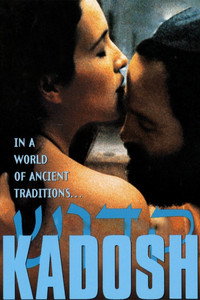
Poster for Kadosh (1999) 13 1h 50m

Kadosh

1999

13

Kadosh

1999 · 1h 50m

The year 2000 approaches in Jerusalem's Orthodox Mea Shearim quarter, where the women work, keep house, and have children so the men can study the Torah and the Talmud. Rivka is happily and passionately married to Meir, but they remain childless. The yeshiva's rabbi, who is Meir's father, wants Meir to divorce Rivka: "a barren woman is no woman." Rivka's sister, Malka, is in love with Yakov, a Jew shunned by the yeshiva as too secular. The rabbi arranges Malka's marriage to Yossef, whose agitation when fulfilling religious duties approaches the grotesque. Can the sisters sort out their hearts' desires within this patriarchal world? If not, have they any other options?

View details
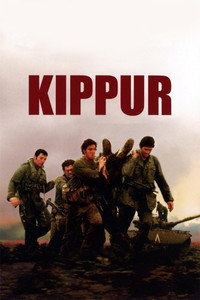
Poster for Kippur (2000) 14 1h 57m

Kippur

2000

14

Kippur

2000 · 1h 57m

When the Yom Kippur War breaks out, two Israeli soldiers find themselves unable to locate their unit. Eager to take part in the war effort, they join an airborne medical evacuation unit.

View details
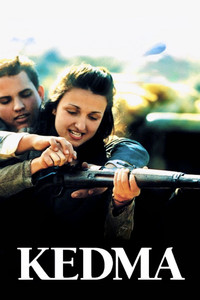
Poster for Kedma (2002) 15 1h 40m

Kedma

2002

15

Kedma

2002 · 1h 40m

In May 1948, shortly before the creation of the State of Israel, hundreds of immigrants from across Europe arrive in Palestine--only to risk arrest by British troops.

View details
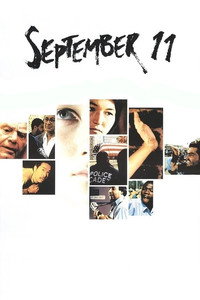
Poster for September 11 (2002) 16 2h 14m

September 11

2002

16

September 11

2002 · 2h 14m

Eleven directors from eleven countries each contribute an eleven-minute short reflecting on the events of 11 September 2001: A village teacher in Iran tries to explain to her young students what's happened; city kids in Burkina Faso think they've spotted Osama bin Laden; a deaf Frenchwoman in Manhattan writes a Dear John letter to a man who left that morning for work at the World Trade Center; a Chilean remembers Allende; events recall other deaths; a mother endures more than her son's death. Tones vary, as do the locales. Most concern coming to terms with the events of the day, but at least one confronts the viewer with tragedy and death.

View details
Poster for Alila (2003) 17 2h 2m

Alila

2003

17

Alila

2003 · 2h 2m

Life in a Tel Aviv apartment complex, an urban mosaic whose seedy characters, try as they might, can't get out of one another's faces. Gabi, a bobbed haired sexpot, and her lover Hezi—who's older, balding and married—rent a room to have an affair, while Ezra, a pot bellied divorcee, supervises an illegal construction site next door. All this racket drives Schwartz, a Holocaust survivor, to a mental breakdown. Other characters include illegal Chinese immigrants, a teenage boy who's afraid to serve in the army, and a corrupt police detective.

View details
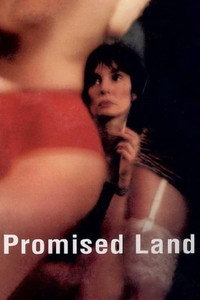
Poster for Promised Land (2004) 18 1h 27m

Promised Land

2004

18

Promised Land

2004 · 1h 27m

"Promised Land" tells the story of a group of young unwitting Estonian girls smuggled through Egypt to be auctioned off as prostitutes in Israel, and of their initiation into this trade of flesh, and finally of the accidental freeing of one girl who most fight for her freedom.

View details
Poster for Welcome to São Paulo (2004) 19 1h 36m

Welcome to São Paulo

2004

19

Welcome to São Paulo

2004 · 1h 36m

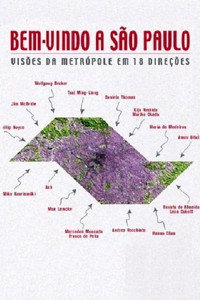
All the feature is given prestige to by the narration in Caetano Veloso's voice, that also signs one of the segments of the project. São Paulo is the largest city of the Southern Hemisphere, with an incessant dynamics of cultural mixtures, with immigrants of all the world and migrants of all parts of Brazil. The gathering of these peculiarities are seen through the 13 film directors's sensibilities and their segments.

View details
Poster for Free Zone (2005) 20 1h 30m

Free Zone

2005

20

Free Zone

2005 · 1h 30m

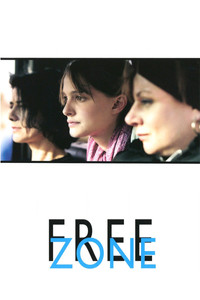
Rebecca, an American who has been living in Jerusalem for a few months now, has just broken off her engagement. She gets into a cab driven by Hanna, an Israeli. But Hanna is on her way to Jordan, to the Free Zone, to pick up a large sum of money.

View details
Poster for To Each His Own Cinema (2007) 21 1h 40m

To Each His Own Cinema

2007
21

To Each His Own Cinema

2007 · 1h 40m

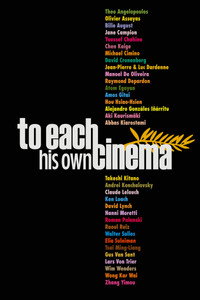
Commissioned to mark the 60th anniversary of the Cannes Film Festival, "To Each His Own Cinema" brought together 33 of the world's pre-eminent filmmakers to produce short pieces exploring the multifarious facets of cinema and their perspective on the state of their chosen artform in the early 21st century.

View details
Poster for One Day You'll Understand (2008) 22 1h 30m

One Day You'll Understand

2008
22

One Day You'll Understand

2008 · 1h 30m

A man endeavors to collect memories of his grandparents who died in a concentration camp during the Holocaust.

View details
Poster for Carmel (2009) 23 1h 33m

Carmel

2009

23

Carmel

2009 · 1h 33m

Israeli filmmaker Amos Gitaï offers a look impressionist long history of armed conflict in their nation.

View details
Poster for Lullaby to my Father (2012) 24 1h 27m

Lullaby to my Father

2012

24

Lullaby to my Father

2012 · 1h 27m

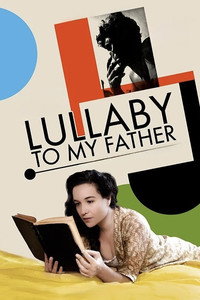
The film intertwines historical events and intimate memories. I observe how architecture represents the transformations of society and those who give form to this architecture. We follow the journey of Munio, my father, born in 1909 in Silesia, Poland, the son of a tenant farmer of a Prussian junker. At the age of 18, Munio goes to Berlin and Dessau to meet Walter Gropius, Kandinsky and Paul Klee at the Bauhaus. In 1933, the Bauhaus was closed by the Nazis, who accused Munio of treason against the German people. Munio was imprisoned, then deported to Basel. He left for Palestine. Upon his arrival in Haifa, he began a career as an architect and adapted European modernist principles to the Middle East.

View details
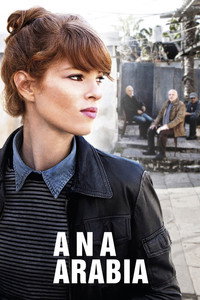
Poster for Ana Arabia (2013) 25 1h 25m

Ana Arabia

2013

25

Ana Arabia

2013 · 1h 25m

Filmed in one sequence-shot of 1 hour and 25 minutes, Ana Arabia is a moment in the life of a small community of outcasts, Jews and Arabs, who live together in a forgotten enclave at the “border” between Jaffa and Bat Yam, in Israel. One day, Yael, a young journalist, visits them. In these dilapidated shacks, in the orchard filled with lemon trees and surrounded by mass public houses, she discovers a range of characters far removed from the usual clichés offered by the region. Yael has the feeling of having discovered a human goldmine. She no longer thinks of her job. Faces and words of Youssef and Miriam, Sarah and Walid, of their neighbors, their friends tell her about life, its dreams and its hopes, its love affairs, desires and disillusions. Their relation to time is different than that of the city around them. In this tinkered and fragile place, there is a possibility of coexistence. A universal metaphor.

View details
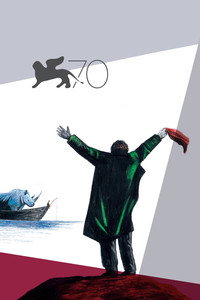
Poster for Venice 70: Future Reloaded (2013) 26 2h

Venice 70: Future Reloaded

2013
26

Venice 70: Future Reloaded

2013 · 2h

Made for the Venice Film Festival's 70th anniversary, seventy filmmakers made a short film between 60 and 90 seconds long on their interpretation of the future of cinema.

View details
Poster for Words with Gods (2014) 27 2h 13m

Words with Gods

2014

27

Words with Gods

2014 · 2h 13m

The first of four installments in the groundbreaking Heartbeat of the World anthology film series. Comprised of several short films by some of the world's most exciting directors, Words with Gods follows the theme of religion - specifically as it relates to an individual's relationship with his/her god or gods...or the lack thereof. In Words with Gods, each director recounts a narrative centered around human fragility, as well as environmental and cultural crises involving specific religions with which each has a personal relationship; including early Aboriginal Spirituality, Umbanda, Buddhism, the Abrahamic faiths, Hinduism, and Atheism. An animated sequence by Mexican animator Maribel Martinez is woven through each of the film segments, with each segment narratively connected as a feature-length film.

View details
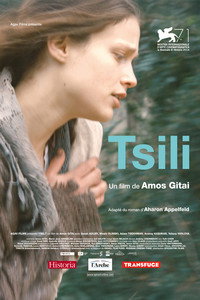
Poster for Tsili (2015) 28 1h 28m

Tsili

2015

28

Tsili

2015 · 1h 28m

Tsili is a young girl caught in the middle of World War II. After her family is taken to a concentration camp, Tsili hides in the forest, free from hatred and men, until the arrival of Marek, a stranger who speaks to her in Yiddish.

View details
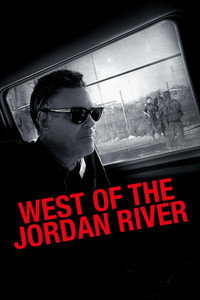
Poster for West of the Jordan River (2018) 29 1h 28m

West of the Jordan River

2018
29

West of the Jordan River

2018 · 1h 28m

Amos Gitai returns to the occupied territories for the first time since his 1982 documentary FIELD DIARY. WEST OF THE JORDAN RIVER describes the efforts of citizens, Israelis and Palestinians, who are trying to overcome the consequences of occupation. Gitai's film shows the human ties woven by the military, human rights activists, journalists, mourning mothers and even Jewish settlers. Faced with the failure of politics to solve the occupation issue, these men and women rise and act in the name of their civic consciousness. This human energy is a proposal for long overdue change.

View details
Poster for Shikun (2024) 30 1h 24m

Shikun

2024

30

Shikun

2024 · 1h 24m

A diverse cross-section of Israeli society converges in a single multi-use building, the Shikun. As people of different languages, origins and generations come together in highly theatrical encounters, they grapple with the current state of affairs. In a poignant metaphor inspired by Eugène Ionesco’s famous play “Rhinoceros”, some begin to turn into rhinoceroses, while others resist.

View details
Poster for Metamorphosis of a Melody () 31 1h 33m

Metamorphosis of a Melody

31

Metamorphosis of a Melody

· 1h 33m

In this film, the itinerary of Flavius Josephus at the time of the destruction of the Temple of Jerusalem in AD 70 crosses that of Prime Minister Yitzhak Rabin, assassinated in 1995, and the memory of the Holocaust through images of Poland. Milim reflects Amos Gitai's views on the history of the Jewish people and Israeli society in the wake of Rabin's assassination.

View details