Skip to content

ReelRoute Auto-generated
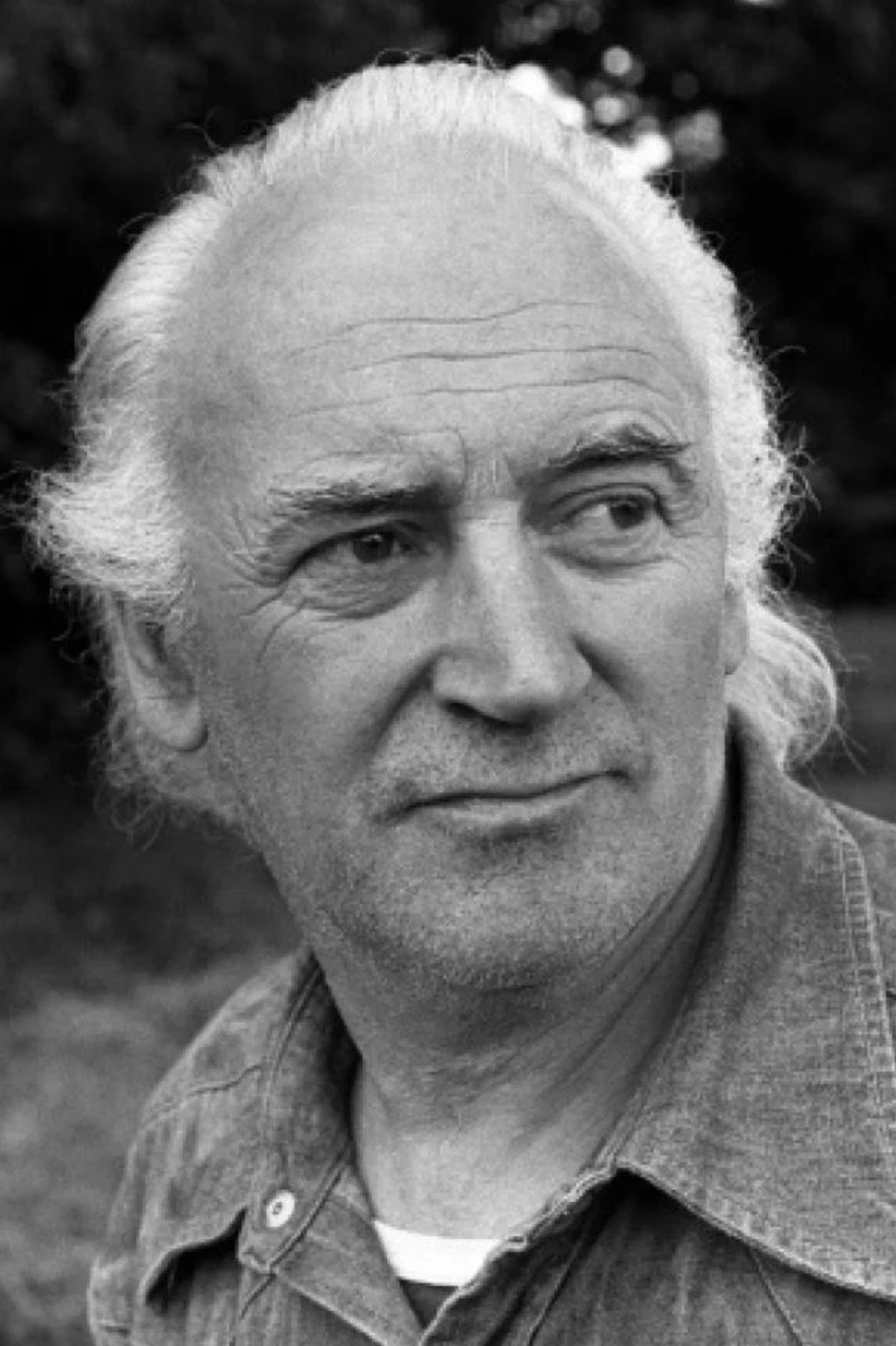
René Vautier
René Vautier
20 films in this ReelRoute

Filmography for René Vautier, sourced from TMDB.

This automatically generated ReelRoute is a starting point, not a complete filmography.

Generated from TMDB director credits, not curated.
Poster for Afrique 50 (1950) 1 17m

Afrique 50

1950

1

Afrique 50

1950 · 17m

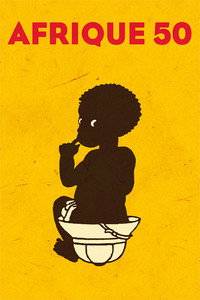
The first French anti-colonialist film, derived from an assignment in which the director was to document educational activities by the French League of Schooling in West Africa. Vautier later filmed what he actually saw: “a lack of teachers and doctors, the crimes committed by the French Army in the name of France, the instrumentalization of the colonized peoples.” For his role in the film, Vautier was imprisoned for several months. The film was banned from public screening for more than 40 years.

View details
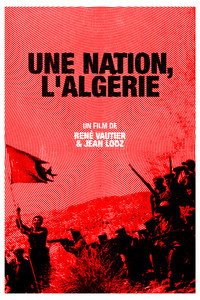
Poster for Une Nation, l'Algérie (1954) 2 10m

Une Nation, l'Algérie

1954

2

Une Nation, l'Algérie

1954 · 10m

View details
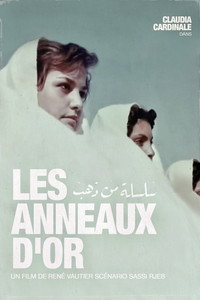
Poster for Les Anneaux d'Or (1956) 3 18m

Les Anneaux d'Or

1956

3

Les Anneaux d'Or

1956 · 18m

At the time of Tunisian independence, owners of large boats decide to sell, while many small fishermen soon find themselves without work. Their wives then decide to pool their gold rings to sell them and thus buy boats.

View details
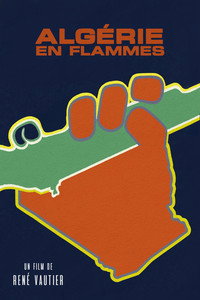
Poster for Algeria in Flames (1958) 4 22m

Algeria in Flames

1958

4

Algeria in Flames

1958 · 22m

These are the first images shot in the ALN maquis, camera in hand, at the end of 1956 and in 1957. These war images taken in the Aurès-Nementchas are intended to be the basis of a dialogue between French and Algerians for peace in Algeria, by demonstrating the existence of an armed organization close to the people. Three versions of Algeria in Flames are produced: French, German and Arabic. From the end of the editing, the film circulates without any cuts throughout the world, except in France where the first screening takes place in the occupied Sorbonne in 1968. Certain images of the film have circulated and are found in films, in particular Algerian films. Because of the excitement caused by this film, he was forced to go into hiding for 25 months. After the declaration of independence, he founded the first Algerian Audiovisual Center.

View details
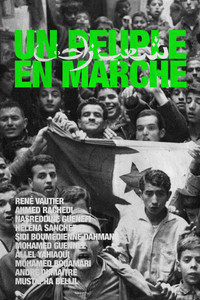
Poster for A People on the March (1963) 5 55m

A People on the March

1963

5

A People on the March

1963 · 55m

Collectively directed by the members of the Centre audiovisuel d'Alger at Ben Aknoun, the film traces, in two parts, Algeria's recent history, from colonial repression to the birth of the National Liberation Army, and the country's postwar reconstruction, framed in sympathy with the socialist project of Ahmed Ben Bella's government. Released in 1964, the film was banned and sealed after Houari Boumediene's June 1965 coup, precisely because of its favorable treatment of Ben Bella.

View details
Poster for The Death Knell (1964) 6 6m

The Death Knell

1964

6

The Death Knell

1964 · 6m

At the beginning of the 1960s, in Salisbury (now Harare), in Southern Rhodesia (now Zimbabwe), the government of Ian Smith hanged three black revolutionaries who had nevertheless been pardoned by the Queen of England. René Vautier, with ZAPU (Zimbabwe African Party for Unity), denounces this killing. Expelled by the Rhodesian police (informed by the French secret services), the filmmaker shoots a film in Algeria in the form of an indictment against colonial savagery. The film was first banned in France, then authorized in 1965.

View details
Poster for Les Ajoncs (1970) 7 13m

Les Ajoncs

1970

7

Les Ajoncs

1970 · 13m

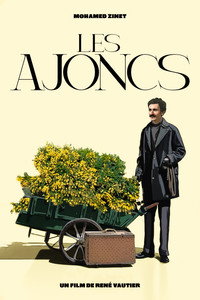
An unemployed Algerian worker leaves Paris by hitchhiking. He soon found himself in Brittany and, seduced by the beauty of wild gorse, eventually established himself as a gorse merchant. But for problems with parking his little cart, he had a rough explanation with a law enforcement officer. The happy intervention of factory workers, the eager kindness they showed him, saved him from despair. This film is part of a trilogy "Them And Us" with the films "Les 3 Cousins" and "Techniquement Si Simple".

View details
Poster for Mourir pour des images (1971) 8 45m

Mourir pour des images

1971

8

Mourir pour des images

1971 · 45m

Returns to ‘La Mer et les jours’ (1958), a film by Alain Kaminker and René Vogel during the filming of which Kaminker disappeared in the sea.

View details
Poster for Techniquement Si Simple (1971) 9

Techniquement Si Simple

1971

9

Techniquement Si Simple

1971

View details
Poster for To Be Twenty in the Aures (1972) 10 1h 40m

To Be Twenty in the Aures

1972
10

To Be Twenty in the Aures

1972 · 1h 40m

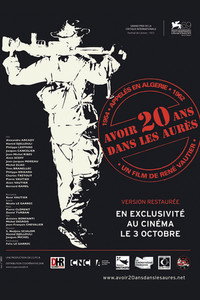
A group of refractory and pacifist Bretons is sent to Algeria. These beings confronted with the horrors of war gradually become killing machines. One of them did not accept it and deserted, taking with him an FLN prisoner who was to be executed the next day.

View details
Poster for A Human Condition (1974) 11 1h 13m

A Human Condition

1974

11

A Human Condition

1974 · 1h 13m

Louis Malle’s meditative investigation of the inner workings of a French automotive plant.

View details
Poster for The Madwoman of Toujane (1974) 12 2h 30m

The Madwoman of Toujane

1974
12

The Madwoman of Toujane

1974 · 2h 30m

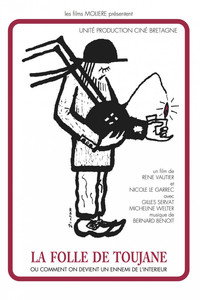
This rambling political melodrama tells the story of a French Breton who learns about colonialism while teaching native students in France's colonies of Tunisia and Algeria and returns to his native Brittany to see that the same conditions prevail there.

View details
Poster for Le poisson commande... (1976) 13 32m

Le poisson commande...

1976

13

Le poisson commande...

1976 · 32m

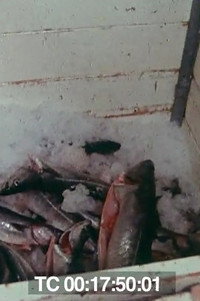
When the three popes of militant film in Brittany, grouped together in the Union of Breton Film Production (UPCB), respond with talent to an order from fishermen's bosses... Le poisson commande includes some very beautiful images of the work at sea, as well as being an apology for industrial fishing. People of Lorient will be able to discover a fishing port then in full activity.

View details
Poster for Quand tu disais, Valéry (1976) 14

Quand tu disais, Valéry

1976

14

Quand tu disais, Valéry

1976

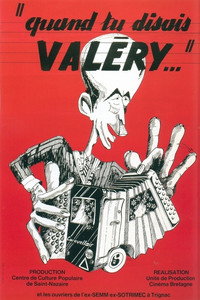
Divided into five parts, this film traces the long strike by workers at the Caravelair caravan factory in Trigniac, near Saint-Nazaire, led by the C.G.T. and C.F.D.T. unions. Shot in 1975, the film achieved the strange feat of being produced entirely by workers' producers - 15,000 of them paid in advance for their tickets - and of being amortized, and even made profitable, by being shown outside the commercial circuit alone.

View details
Poster for Quand les femmes ont pris la colère (1977) 15 1h 15m

Quand les femmes ont pris la colère

1977
15

Quand les femmes ont pris la colère

1977 · 1h 15m

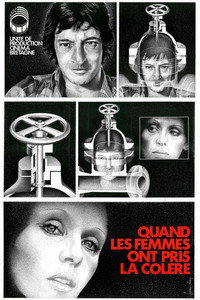
The action takes place in a metallurgical factory which was part of the Pechiney-Ugine-Külhman trust in Couëron, Loire-Atlantique, in 1975. To show their solidarity with their husbands on strike, workers' wives invaded the director's office and obtained in two hours what was refused to them for months. But the management complained and sued. Twelve wives were charged with forcible confinement. The mobilization then widened. The women called on the Bretagne Cinema Production Unit (UPCB) to make a film about their struggle. Narrating the courageous action of solidarity of women with the strikers of the factory and the emergence of a collective awareness, both feminist and working-class, the film is also an echo chamber sensitive to the aspirations of the twelve women who were charged.

View details
Poster for Marée noire, colère rouge (1978) 16 1h 5m

Marée noire, colère rouge

1978
16

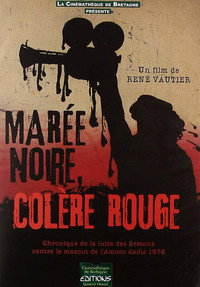
Marée noire, colère rouge

1978 · 1h 5m

March 16, 1978. The Amoco-Cadiz supertanker tanker sank off Portsall, a small port in northern Finistère. This film sets out to demonstrate the misleading information campaign that followed the accident as well as its disastrous ecological consequences. René Vautier denounces the ridiculous measures then taken by the governments, the financial interests, the traffic of oil tankers and those of the tugs and the role of the media complicit in this policy. Faced with this, the anger of the Breton people and local elected officials who were never consulted.

View details
Poster for Déjà le sang de mai ensemençait novembre (1982) 17 1h 1m

Déjà le sang de mai ensemençait novembre

1982
17

Déjà le sang de mai ensemençait novembre

1982 · 1h 1m

The essay by René Vautier, "Déjà le sang de Mai ensemençait Novembre", starts with the recapitulation of the representations of Algeria throughout the history of visual arts in France in an effort to explore the causes for the quest for independence.

View details
Poster for Guerre aux images en Algérie (1985) 18

Guerre aux images en Algérie

1985

18

Guerre aux images en Algérie

1985

View details
Poster for À Propos De... L'autre Détail (1985) 19 50m

À Propos De... L'autre Détail

1985
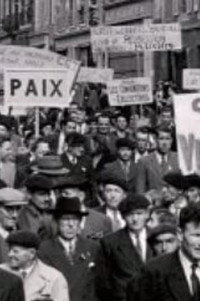
19

À Propos De... L'autre Détail

1985 · 50m

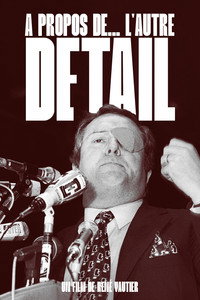
Documentary edited from testimonies on the torture of people who experienced the war. Some witnesses were tortured by Jean-Marie Le Pen. These testimonies will help defend the newspaper Le Canard Enchaîné in court against Jean-Marie Le Pen for defamation. The film was shown in 1985 during the trial and some witnesses also came to support the newspaper. But the 1963 amnesty law protects the politician, prohibiting the use of images that could harm people who served during the Algerian war.

View details
Poster for Histoires d’images, images d’Histoire (2014) 20 54m

Histoires d’images, images d’Histoire

2014

20

Histoires d’images, images d’Histoire

2014 · 54m

In 1950, in full reconstruction, the workers of Brest went on strike. It will last more than a month and will be bloody. Edouard Mazé, a 26-year-old worker from Brest, will die during the demonstration on April 17, dozens of his comrades will be injured and one of them, Pierre Cauzien, will be amputated five days later. The city is under siege. René Vautier, a 20-year-old filmmaker, goes clandestinely to Brest, at the call of the CGT, to shoot a film on the reasons for anger. The trace of these events is now tenuous and carried by witnesses whose words are gradually dying out. This film proposes to find the traces of these events, to collect the words of the witnesses, to search their personal archives, to exhume the forgotten photograms, to open the official files hitherto protected, to delve into the depths of individual memories to understand. In 1950, a man died... But who still remembers?

View details