Skip to content

Cinematographer ReelRoute

Masaki Tamura
Cinematographer
26 January 1939 – 23 May 2018 | Hirosaki, Aomori, Japan
10 films in this ReelRoute

Masaki Tamura (たむら まさき, Tamura Masaki, 26 January 1939 – 23 May 2018) was a Japanese cinematographer. Born in Aomori Prefecture, Tamura early on worked at Iwanami Productions (Iwanami Eiga), where. as an assistant, he helped photograph documentary films.

Explore films from Masaki Tamura's work as a cinematographer.

This automatically generated ReelRoute is a starting point, not a complete filmography.

How this ReelRoute is generated

Generated from TMDB movie credits matching this role. Non-documentary films must have a TMDB rating of at least 6.5/10, at least 50 votes, and a poster. Documentaries are currently exempt from those requirements. Eligible films are ranked using a popularity-based score, with up to 24 included, then displayed chronologically. Films outside this ReelRoute may still be part of the person's credits.
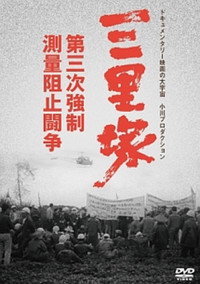

Poster for Sanrizuka: The Three-Day War (1970) 1

Sanrizuka: The Three-Day War

1970

1

Sanrizuka: The Three-Day War

1970

"Sanrizuka: The Three-Day War" is a documentary by Shinsuke Ogawa chronicling the escalation of conflict surrounding the Japanese government’s plan to build a new international airport on farmland in Sanrizuka near Tokyo. As farmers resisted eviction and activists from across the country joined the struggle, clashes with police intensified, resulting in large-scale confrontations that marked a critical phase of the Sanrizuka movement.

View details
Poster for Lady Snowblood (1973) 2

Lady Snowblood

1973

2

Lady Snowblood

1973

A strikingly beautiful young woman is trained from birth to be a deadly instrument of revenge against the swindlers who destroyed her family.

View details
Poster for Furuyashiki: A Japanese Village (1982) 3

Furuyashiki: A Japanese Village

1982

3

Furuyashiki: A Japanese Village

1982

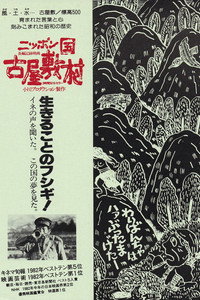
This is Ogawa Productions’ first major film from their Yamagata period. They had already started photography on Magino Village -A Tale but they were drawn to this village deep in the high country above Magino when a particularly cold bout of weather threatened crops. Inevitably, their attention strayed from the impact of weather and geography on the harvest to the “life history” of Furuyashiki Village. On the one hand, Ogawa returns to his roots by playing with the conventions of the science film. At the same time, he discovers a local, peripheral space in which to think about the nation and the state of village Japan. From this “distant perspective” in the very heart of the Japanese mountains, Ogawa discovers a village still dealing with the trauma of global warfare and struggling for survival as their children flee for the cities.

View details
Poster for Tampopo (1985) 4

Tampopo

1985

4

Tampopo

1985

In this humorous paean to the joys of food, a pair of truck drivers happen onto a decrepit roadside shop selling ramen noodles. The widowed owner, Tampopo, begs them to help her turn her establishment into a paragon of the "art of noodle-soup making". Interspersed are satirical vignettes about the importance of food to different aspects of human life.

View details
Poster for Magino Village: A Tale (1987) 5

Magino Village: A Tale

1987

5

Magino Village: A Tale

1987

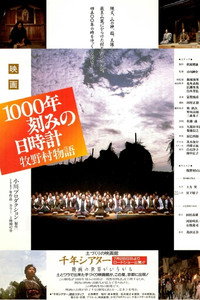
The movie compiles footage taken by Ogawa Production for a period of more than ten years after the collective moved to Magino village. Unique to this film are fictional reenactments of the history of the village in the sections titled "The Tale of Horikiri Goddess" and "The Origins of Itsutsudomoe Shrine". Ogawa combines all the techniques that were developed in his previous films to simultaneously express multiple layers of time—the temporality of rice growing and of human life, personal life histories, the history of the village, the time of the Gods, and new time created through theatrical reenactment—bring them into a unified whole. The faces of the Magino villagers appear in numerous roles transcending time and space—sometimes as individuals, sometimes as people who carry the history of the village in their memories, sometimes as storytellers reciting myths, and even as members of the crowd in the fictional sequences.

View details
Poster for Wandering Peddlers (1995) 6

Wandering Peddlers

1995

6

Wandering Peddlers

1995

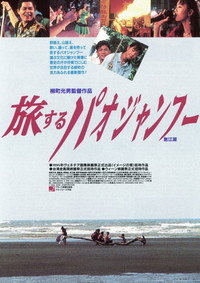
Resulting pic blurs the line between documentary and fiction as Yanagimachi explores the lives of a couple of groups of peddlers, and they appear to act out their personal dramas for the camera.

View details
Poster for Eureka (2001) 7

Eureka

2001

7

Eureka

2001

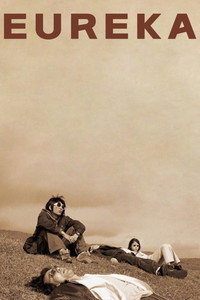
In rural Japan, the survivors of a tragedy converge and attempt to overcome their damaged selves, all while a serial killer is on the loose.

View details
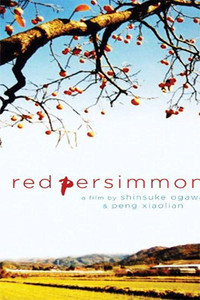
Poster for Red Persimmons (2001) 8

Red Persimmons

2001

8

Red Persimmons

2001

The ostensible subject of this film is the growing, drying, peeling and packaging of persimmons in the tiny Japanese village of Kaminoyama. The inhabitants explain that it is the perfect combination of earth, wind and rain that makes their village’s persimmons superior to those grown anywhere else, including the village just a few miles away. The film’s larger subject, however, is the disappearance of Japan’s traditional culture, the end of a centuries-old way of life.

View details
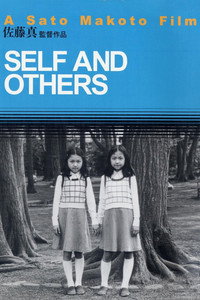
Poster for Self and Others (2001) 9

Self and Others

2001

9

Self and Others

2001

In 1983, photographer Gocho Shigeo met an early death at the young age of 36. The view we see reflected in Gocho’s photographic images has become more profound over time since his death and has struck a chord in people’s hearts. While focusing on Gocho’s collection of photographs Self and Others, the film also visits places associated with him, creating a collage with the manuscripts, letters, photographs and voice recordings remaining in an attempt to capture “one more gesture”—a theme pursued by Gocho through photographic expression. This film is neither a critical biography nor a monograph on the photographer. Rather, we are offered a new perception. As if mesmerized, the photographs Gocho left behind captivate us in their gaze.

View details
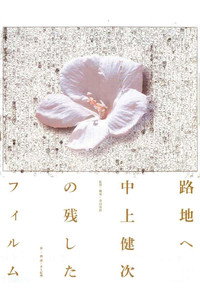
Poster for To the Backstreet: The Films Kenji Nakagami Left Out (2001) 10

To the Backstreet: The Films Kenji Nakagami Left Out

2001

10

To the Backstreet: The Films Kenji Nakagami Left Out

2001

Kenji Nakagami, one of the most notable Japanese writers of the post-war, died in 1992. His work reveals a strong connection to his homeland, Kishu: a mountainous region that connects to the Pacific Ocean through a river. "To The Alley" (alternative title) is a documentary about Kenji's life. Incorporating 16 mm images from the writer's personal archive and adding new footage, director Shinji Aoyama travels through the paths of the life and art of the Japanese writer.

View details