Skip to content

Cinematographer ReelRoute

Jacek Petrycki
Cinematographer
01 December 1948
24 films in this ReelRoute

Explore films from Jacek Petrycki's work as a cinematographer.

This automatically generated ReelRoute is a starting point, not a complete filmography.

How this ReelRoute is generated

Generated from TMDB movie credits matching this role. Non-documentary films must have a TMDB rating of at least 6.5/10, at least 50 votes, and a poster. Documentaries are currently exempt from those requirements. Eligible films are ranked using a popularity-based score, with up to 24 included, then displayed chronologically. Films outside this ReelRoute may still be part of the person's credits.
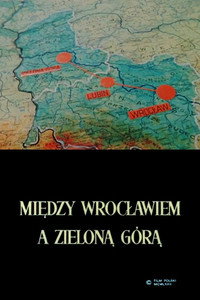
Poster for Between Wrocław and Zielona Góra (1972) 1

Between Wrocław and Zielona Góra

1972
1

Between Wrocław and Zielona Góra

1972

A commissioned film about the Lubin copper mine.

View details
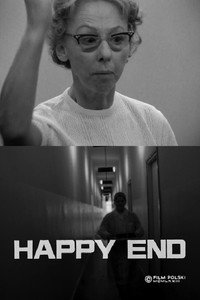
Poster for Happy End (1973) 2

Happy End

1973

2

Happy End

1973

A purge in the style of those of March 1968 is to take place at a party meeting. Instead, it turns into a psychodrama.

View details
Poster for First Love (1974) 3

First Love

1974

3

First Love

1974

After the doctor's refusal to perform abortion on a 17-year old girl, she and her boyfriend have to cope with the new situation. They both need to learn to take responsibility for their decisions, in spite of numerous hardships facing them.

View details
Poster for The Visit (1974) 4

The Visit

1974

4

The Visit

1974

A "Polityka" weekly journalist Marta Wesolowska and photo-reporter Erazm Ciolek visit Urszula Flis, who runs a country farm. A young woman living on her own, Flis is an untypical villager in that she is interested in culture, corresponds with writers, etc.

View details
Poster for Hospital (1977) 5

Hospital

1977

5

Hospital

1977

24 hours in the life of a hospital from the point of view of the doctors and nurses.

View details
Poster for Camera Buff (1979) 6

Camera Buff

1979

6

Camera Buff

1979

Filip buys an 8mm movie camera when his first child is born. Because it's the first camera in town, he's named official photographer by the local Party boss. His horizons widen when he is sent to regional film festivals with his first works but his focus on movie making also leads to domestic strife and philosophical dilemmas.

View details
Poster for Matriculation (1979) 7

Matriculation

1979

7

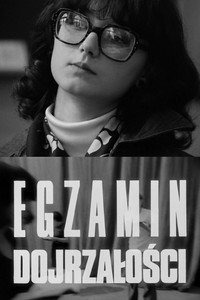
Matriculation

1979

The final oral exam in history and social studies at one of Warsaw's high schools. The film illustrates the theatre of social life in Soviet Poland where one says different things on the stage and another behind the scenes.

View details
Poster for Microphone's Test (1980) 8

Microphone's Test

1980

8

Microphone's Test

1980

A Warsaw Pollena-Uroda cosmetics factory radio broadcaster is working on a programme investigating the workers' sense of factory ownership. The workers' answers come as a surprise, especially to the management. About the ruling and the ruled in communist Poland.

View details
Poster for Talking Heads (1980) 9

Talking Heads

1980

9

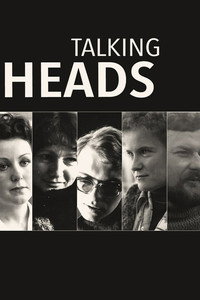
Talking Heads

1980

People of different age, profession and social status answer two simple questions: who they are and what they want from life.

View details
Poster for How to Live (1981) 10

How to Live

1981

10

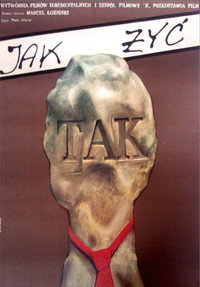
How to Live

1981

A holiday training camp for young married couples who belong to the Polish Socialist Youth Union (ZSMP) begins at the campsite. From the commander's welcome speech, they learn that a film crew will record camp life and training classes under the slogan "Model Family".

View details
Poster for Workers '80 (1982) 11

Workers '80

1982

11

Workers '80

1982

Documentary about the beginning of Solidarnosc.

View details
Poster for No End (1985) 12

No End

1985

12

No End

1985

1982, Poland. A translator loses her husband and becomes a victim of her own sorrow. She looks to sex, to her son, to law, and to hypnotism when she has nothing else in this time of martial law when Solidarity was banned.

View details
Poster for Workshop Exercises (1986) 13

Workshop Exercises

1986

13

Workshop Exercises

1986

A street poll about contemporary youth. The answers are engineered to show the manipulation of propaganda and television.

View details
Poster for Witnesses (1987) 14

Witnesses

1987

14

Witnesses

1987

On July 4th, 1946, the crowd in Kielce, Poland, slaughtered forty-two Jews and wounded many others. Forty years later, in 1987, Marcel Łoziński visited those places and met some witnesses of the carnage.

View details
Poster for Interrogation (1989) 15

Interrogation

1989

15

Interrogation

1989

In Stalinist Poland, cabaret singer Tonia decides to spend the evening drinking with a group of friends. The next morning, she awakes to find that, for reasons unknown to her, she has been jailed as a political prisoner. As prison officials interrogate, torture and humiliate her, she fights for survival and to maintain her innocence by refusing to sign a false confession. As her years of imprisonment pass, her relationship with her captors grows more complicated.

View details
Poster for Europa Europa (1990) 16

Europa Europa

1990

16

Europa Europa

1990

A Jewish boy separated from his family in the early days of WWII poses as a German orphan and is taken into the heart of the Nazi world as a 'war hero' and eventually becomes a Hitler Youth.

View details
Poster for The Katyn Forest (1990) 17

The Katyn Forest

1990

17

The Katyn Forest

1990

Marcel Łoziński tells the story of the crime committed by the NKVD in Katyn in 1940. He interweaves accounts of witnesses and survivors with images from the pilgrimage of members of Katyn Families to the place of murder, death and nameless burial of their loved ones.

View details
Poster for 89 mm from Europe (1993) 18

89 mm from Europe

1993

18

89 mm from Europe

1993

This movie shows the simplest difference between Europe and former Soviet Union. It is the eponymous 89 mm - Russian train tracks are 89 mm wider than tracks in European countries. And because of this fact, it is not easy to go through the Soviet border by train in Brest as the passengers in the film do.

View details
Poster for Autoportret (1993) 19

Autoportret

1993

19

Autoportret

1993

View details
Poster for The Betrayed (1995) 20

The Betrayed

1995

20

The Betrayed

1995

As Russian tanks advance over the plains of Chechnya, a group of Russian mothers search for the sons, conscripts from the ill-fated 131st Brigade, they believe have been captured by the Chechens. They place their trust in Colonel Kosov, a Russian liaison officer responsible for organising prisoner exchanges across the front line.

View details
Poster for So it Doesn’t Hurt (1998) 21

So it Doesn’t Hurt

1998

21

So it Doesn’t Hurt

1998

Polish filmmaker Marcel Łoziński revisits the farmer/intellectual Urszula Flis, subjects of his 1978 film 'A visit'. Łoziński observes the changes that have occurred over the intervening 23 years and again persuades this sensitive, secluded woman to talk through her thoughts, fears and feelings. Through this, the morality of the documentary portrait itself is called into question.

View details
Poster for How It's Done (2006) 22

How It's Done

2006

22

How It's Done

2006

Piotr Tymochowicz, media advisor to some of Poland's top politicians, claims that anybody can be molded into a charismatic leader. To prove it he's looking for a greenhorn that can be turned into a candidate. A call is put out for would-be participants, and hundreds apply. A small group is selected and under go training. Polish master Marcel Lozinksi followed Tymochowicz and this project for three years, and this beautifully shot and edited work paints a compelling portrait of cynical (and quite familiar) demagogy and populism in action.

View details
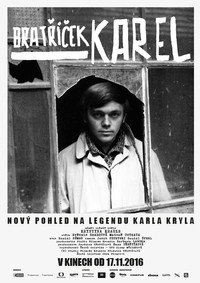
Poster for Bratříček Karel (2016) 23

Bratříček Karel

2016

23

Bratříček Karel

2016

View details
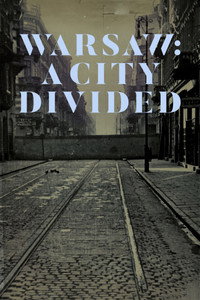
Poster for Warsaw: A City Divided (2019) 24

Warsaw: A City Divided

2019

24

Warsaw: A City Divided

2019

The history of the Warsaw Ghetto (1940-43) as seen from both sides of the wall, its legacy and its memory: new light on a tragic era of division, destruction and mass murder thanks to the testimony of survivors and the discovery of a ten-minute film shot by Polish amateur filmmaker Alfons Ziółkowski in 1941.

View details